South Australia Pokies: Facts About Games and Returns
 Available in AU
Pokie outcomes are random, while return settings and venue claims require specific evidence to support comparisons.

Table of Contents
- South Australia’s Pokies: What the Available Facts Can—and Cannot—Tell You
- Checking Whether a Venue Is Open
- Airport, CBD and Other Location Searches
- Online Pokies, Deposits and the Legal Position
- South Australian Venues and Gaming-Machine Oversight
- Crown Searches and the Limits of the Available Information
- Cashless Play and Unverified Venue Claims
- South Australia Pokies: A Fact-Based Summary
South Australia’s Pokies: What the Available Facts Can—and Cannot—Tell You
A guide to pokies in South Australia needs to separate two questions: how a game produces an outcome, and what can be established about its return settings. The first has a clear answer. The second depends on information about the particular game and the setting in use. Neither answer, on its own, identifies which pokie pays best.
Every spin is generated separately by a Random Number Generator (RNG). Its result is not determined by the previous spin: a win does not make another win due, and a run of losses does not create a reason to expect the next spin to pay. Past outcomes may make a session feel as though it has a pattern, but they do not provide a reliable forecast of the next result.
That distinction matters when comparing claims about the “best” pokies. A list based on recent wins, anecdotes or a short run of observed results cannot establish that a game is more likely to pay on its next spin. Nor does an individual result prove that one pokie has a better return than another. Random outcomes can vary over a session; they are not a ranking system.
Choosing an online pokies option from South Australia means looking beyond the game category and checking the details that matter to you. This list is a starting point for reviewing the available operator information.
License: Curacao Golden Pokies is listed with a Curaçao license. No other operator details were provided.
Payout speed: crypto ~90 minutes, fiat 1-5 days · Min. deposit: A$30 Kingmaker lists a minimum deposit of A$30. Its stated payout times are around 90 minutes for crypto and 1–5 days for fiat.
License: Curacao – Antillephone N.V. (Versus Odds B.V.) · Min. deposit: EUR 20 Thor Casino lists a Curaçao license held by Antillephone N.V. (Versus Odds B.V.) and a minimum deposit of EUR 20.
License: Curacao eGaming (Roby Games Ltd) Roby Casino is listed with a Curaçao eGaming license associated with Roby Games Ltd. No other details were provided.
License: Curacao eGaming OGL/2023/174/0082 (Dama N.V.) · Min. deposit: A$15 LevelUp Casino lists a Curaçao eGaming OGL/2023/174/0082 license associated with Dama N.V. Its stated minimum deposit is A$15.
License: Curacao Gaming Control Board OGL/2023/176/0095 (Hollycorn N.V.) GoldenCrown is listed with a Curaçao Gaming Control Board OGL/2023/176/0095 license held by Hollycorn N.V.
License: Curacao eGaming (Dama N.V.) JeetCity Casino is listed with a Curaçao eGaming license associated with Dama N.V. No other operator details were provided.
License: Curacao Gaming Control Board (TechSolutions Group N.V.) Bizzo Casino is listed with a Curaçao Gaming Control Board license associated with TechSolutions Group N.V. No other details were provided.
License: Curacao · Min. deposit: A$20 (POLi) Lucky Dreams lists a minimum deposit of A$20 when using POLi, alongside its Curaçao license.
Payout speed: crypto under 1 hour, PayID 1-3 business days · Min. deposit: A$20 (A$30 to qualify for the bonus) Ricky Casino lists crypto payouts in under an hour and PayID payouts in 1–3 business days. Its minimum deposit is A$20, or A$30 to qualify for the bonus.
RTP is a setting, not a promise
Return to player, or RTP, describes a game’s return as a proportion of total wagers over a very large number of plays. It is a statistical measure, not a payment schedule for an individual session. It does not specify when a win will occur, how large it will be, or whether a particular player will receive that return.
A specialist review reports that some game providers give casinos a choice of more than one RTP configuration for a particular pokie. On that account, the same title could operate at different return settings in different casinos. This is a qualified point, not evidence that every provider offers choices or that every casino changes settings. It does mean that a game’s name alone may not establish the RTP in use at a particular location.
A comparison therefore needs more than a title or a general claim that a game has a high return. It needs reliable information about the actual setting being offered, and that information must relate to the relevant game and casino. Without those details, a precise comparison cannot be made. A number attached to a game elsewhere does not, by itself, confirm the setting used in South Australia.
Even when a stated RTP is available, it should not be read as a guarantee for a particular visit. The figure describes long-run theoretical performance; the RNG determines individual results. Those are different measures, and treating one as a forecast of the other produces a misleading calculation.

What “best paying” can reasonably mean
“Best paying” can refer to several things: the size of a possible prize, the frequency of wins, or the theoretical return. Those are not interchangeable. A game associated with a large possible prize is not necessarily one with a higher RTP, and a higher theoretical return does not promise frequent or steady wins.
The same caution applies to claims about South Australia casino pokies as a category. A location label does not reveal how an individual game is configured, and a game’s reputation does not establish its current setting. A defensible comparison would require evidence tied to the specific pokie and its operating configuration, rather than broad labels such as “popular”, “hot” or “best”.
This guide therefore treats “best pokies in South Australia” as a request for dependable comparison, not as permission to invent a leaderboard. The useful distinction is between what the mechanics establish—the independent generation of each spin—and what would require game-specific evidence, such as the RTP setting applied at a particular casino.
Searches for pokies in South Australia CBD or for online pokies in South Australia also describe different contexts. The present discussion concerns the limits of comparing game outcomes and return settings; a location phrase does not supply evidence about a game’s configuration. Online play raises separate legal and practical issues and should not be treated as interchangeable with land-based pokies.
- Identify what a claim measures
- Check if it refers to the exact game and setting
- Distinguish theoretical returns from individual outcomes
- Use lists based on recent wins or anecdotes as rankings
- Assume a game’s name establishes its current RTP
- Treat a single result as proof of better returns
For a player assessing a claim, the accounting test is simple: identify what the claim measures, check whether it refers to the exact game and setting, and distinguish a theoretical return from an individual outcome. If those parts are missing, “best paying” is a sales description, not a conclusion supported by a calculation.
Checking Whether a Venue Is Open
A venue’s usual schedule is not the same as confirmation that its doors are open at a particular moment. Opening hours can be affected by changes to the venue’s own timetable or by a temporary interruption to service. For a visit at a specific time, the reliable check is direct confirmation from the venue, using its current contact details or official information channel.
This matters most when the visit depends on an early start or a late finish. A general statement that a venue operates daily does not establish that its gaming area is available at the time needed. Nor does a reference to a venue being open establish that every part of it is operating. The question is not simply whether the building is accessible, but whether the area containing pokies is open to patrons then.
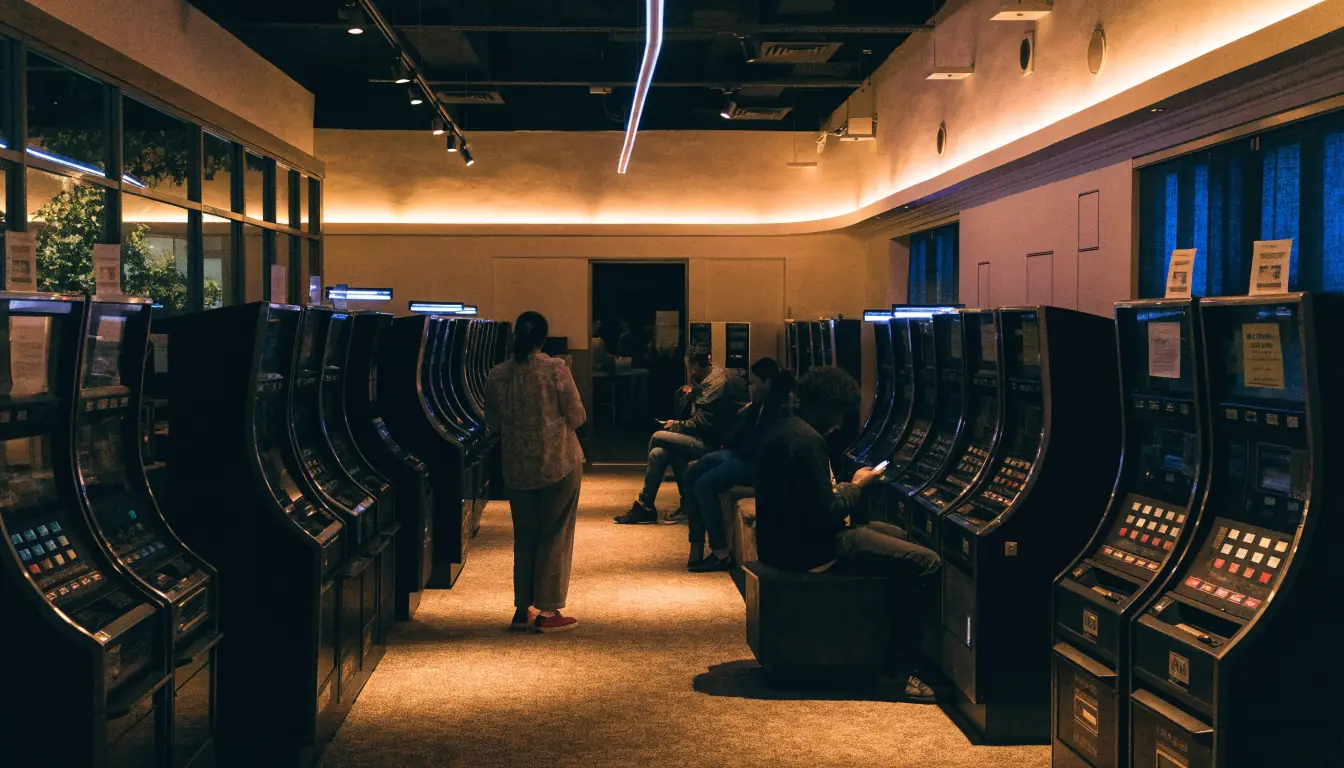
Confirm the hours for the intended visit
A useful check is specific: confirm the opening time for the relevant day and whether the pokies area will be operating when expected. If the planned arrival is close to opening or closing, it is worth confirming that point directly rather than relying on a broad summary of normal hours. A schedule may describe routine operations, while a one-off change affects access on the day.
For an early visit, the key issue is whether pokies are available at the intended time, not whether the venue has some services operating early. For a late visit, the same distinction applies in reverse: a venue may remain open while gaming operations have ended. These details are separate from a venue’s general public-facing hours and are best checked together.
A current listing can be a useful starting point, but it should not be treated as a guarantee. Listings may not reflect temporary changes, and a schedule can be updated after information has been copied elsewhere. If a listing and direct confirmation differ, the venue’s current information is the more relevant basis for planning.
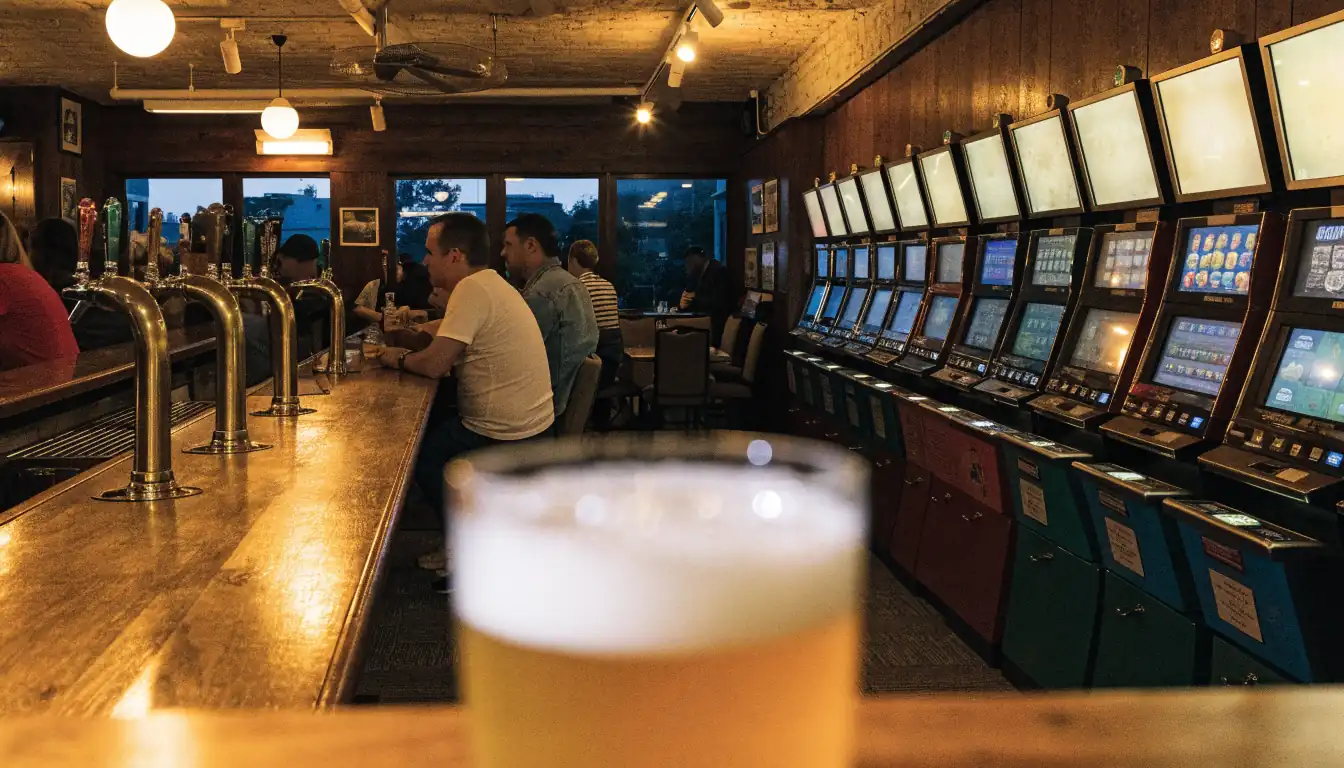
What to ask when confirming access
The check can be kept brief. Confirm the day’s opening time, whether the gaming area will be operating at the planned arrival time, and whether any temporary change affects access. If a venue gives separate hours for different facilities, the distinction should be made explicit. Otherwise, a statement about the venue’s general opening hours may leave the main question unanswered.
For a visit planned around a particular time, confirmation close to departure is more useful than relying on an old note or an earlier conversation. That does not mean every visit requires a lengthy verification process. It means the timing matters: information gathered well before the visit can lose value if the schedule changes.
The same approach applies when hours are described as “late” or “early”. Those terms are not precise operating times. They do not establish whether pokies are available at a particular hour, or whether access continues until the venue itself closes. A definite answer from the venue is more useful than an impression created by a general description.

Opening status is not a payout measure
Opening hours answer an access question. They do not indicate the payout percentage of a pokie, establish that a particular game is available, or show how a game will perform during a session. A venue being open now is not evidence of better returns, and a longer operating schedule does not change the terms of a game.
Keeping those questions separate avoids treating convenience as a measure of value. Access is a matter of schedule; payout information concerns the game and its settings. One cannot be inferred from the other. The same applies to a venue’s general reputation or its advertised operating pattern: neither confirms a specific outcome.
Responsible gambling coverage and operating hours
A reported change to venue responsibilities is also distinct from opening times. Region Riverina reported that, from 1 July, venues operating more than 20 gaming machines must have a dedicated Responsible gambling officer (RGO) on duty while those machines are running. The report also described a one-month grace period for venues to remove signage and introduce the officers.

That requirement concerns the period when gaming machines are operating; it does not set a venue’s opening schedule or confirm that a particular venue is open. An RGO being on duty is not a substitute for checking access, and a venue’s stated hours do not establish whether that staffing requirement applies there. The two issues answer different questions.
For a time-sensitive visit, the practical sequence is therefore straightforward: establish the current schedule with the venue, clarify whether pokies will be operating at the intended time, and treat any separate operational detail as a separate matter. A venue’s doors being open, its gaming area operating, and a particular staffing arrangement being in place are not interchangeable facts.
Avoid relying on a single old listing
Opening information can be repeated across directories and other third-party pages long after it was first posted. Repetition does not make a schedule current. If the visit depends on a particular opening time, checking the venue directly reduces the risk of arriving on the basis of an outdated listing.
The same caution applies to statements that a venue is open “now”. That description is only useful if it reflects the current day and time, and if it refers to the area being sought. A page that says a venue is open may not answer whether pokies are available at that moment. Confirmation should cover the relevant part of the venue, rather than relying on a broad status label.
No single description of early or late access applies across South Australia. Schedules belong to individual venues and can change; the appropriate check is therefore venue-specific. For an early-morning visit, confirm the exact start of pokies operations. For a late visit, confirm when those operations end, rather than assuming they match the venue’s closing time.
A direct answer is the useful endpoint: whether the venue is operating on the intended day, and whether pokies will be available during the planned visit. Without that confirmation, “open” is too broad to settle the access question.
Location labels such as “near the airport” or “CBD” describe proximity and convenience, not the quality or return settings of a game.
Airport, CBD and Other Location Searches
A request for pokies near an airport, in a central business district or in another part of South Australia is a location question, not a measure of game quality. A venue’s proximity to a landmark can help with planning a trip; it says nothing about the return setting of a pokie or the result of an individual spin.
The wording “near the airport” needs a precise starting point. An airport precinct can cover more than the terminal entrance, and a venue described as nearby may still require a separate journey. Before relying on a distance label, establish which airport entrance or other landmark is being used as the reference point, then compare that point with the venue’s street address. A pin that appears close on a map is not, by itself, a confirmed route or a measure of travel time.
The same distinction applies to searches for pokies in an airport area. A general area name does not establish that a venue is inside the airport, attached to it or within easy walking distance. Those are separate claims. The address, the mapped entrance and the route between them need to agree before “at the airport” or “next to the airport” can be treated as a useful description.
CBD and central-area searches
“CBD” is a more specific way to describe a city centre than “central”, but neither term supplies a street address. A result labelled central may refer to a broad surrounding area, while a CBD description may still leave the exact block or entrance unclear. For a planned visit, the practical details are the venue’s full address and the point at which visitors enter—not the broad label attached to a listing.

The word “best” also needs care when attached to a CBD search. A central location may be more convenient for one journey and less convenient for another. It cannot establish that the pokies themselves are better, pay more often or have a higher return. Each spin is an independent random event determined by a Random Number Generator. The location of a machine does not change that mechanism.
A location comparison can therefore be made on ordinary logistical terms: how far the address is from the intended destination, whether the route is straightforward, and whether the entrance shown is the one used by visitors. These points describe access. They are not evidence about game performance.
“Near me” and broad regional wording
A “near me” result depends on the location used by the device or service producing it. If location access is disabled, inaccurate or set to a different starting point, the displayed order may not match the person’s actual surroundings. The result should be treated as a starting point for checking an address, rather than as proof that a venue is close.
Terms such as “north”, “central” or “South Australia” cover different scales of geography. “North” may be intended as a broad regional description, while a suburb or town name is more precise. A state-wide phrase cannot identify a particular venue or establish how far away it is. Narrowing the place name to a suburb, town or specific landmark makes the intended area clearer, but the final check remains the actual address.
Attention A phrase combining South Australia with “vic” is ambiguous and may be an incomplete or mistaken location label.
A phrase that combines South Australia with “vic” is especially ambiguous. “Vic” may be intended as an abbreviation for Victoria, or it may be an incomplete or mistaken location label. It should not be treated as proof that a venue sits on a border or serves two states. The state and locality need to be identified separately before any distance comparison makes sense.
Clubs and place names
A search for clubs with pokies describes a type of venue and an activity, but it does not identify which club is meant. A club name alone may also be insufficient if more than one place uses a similar name. Matching the exact venue name to its address reduces the risk of travelling to the wrong site.
A place name such as Parkes should likewise be checked against a full locality and state. Similar names can refer to different places; the name by itself is not a reliable location pin. A result’s wording should not substitute for a street address and a map point that correspond to the same venue.
Useful location checks are simple: confirm the venue’s complete address, make sure the map pin corresponds to that address, and inspect the route from the actual departure point. If a listing uses only a broad area, promotional description or landmark reference, it does not provide enough detail to calculate a meaningful journey. That is a limitation of the description, not a reason to infer where the venue must be.

Distance is also different from convenience. A short straight-line distance can involve an indirect route, while a longer distance may follow a more direct road or transport connection. A map’s route estimate can support a travel decision, but it does not confirm the venue’s facilities or the availability of pokies. Those are separate details and should not be inferred from a pin or category label.
For South Australian clubs and other venues, the useful outcome of a location check is a correctly matched place and address. Airport, CBD, central, northern and “near me” descriptions are only broad navigation cues. None establishes that a particular venue is the closest option, that it is inside a landmark precinct, or that its pokies have any advantage over those elsewhere.
Online Pokies, Deposits and the Legal Position
Online play is legally separate from land-based pokies in South Australia. Under the Interactive Gambling Act 2001, operators cannot provide real-money online casino games to people in Australia without a domestic licence. No Australian-licensed online casino exists. This applies to online pokies regardless of whether they are described as high-limit games, no-deposit offers or games with a particular payout claim.
The law is directed at the companies providing the service, rather than making an individual player liable simply for playing. That distinction does not make offshore play a protected transaction. Access to illegal gambling sites is subject to blocking, and an Australian player who is refused a withdrawal has no legal recourse in Australia against the offshore casino. A displayed balance is therefore not equivalent to money that can be recovered through a local licensing system.
Legal Status
No Australian-licensed online casino exists, and players have no legal recourse in Australia against offshore operators.
Deposits are not evidence of protection
Payment labels do not change the legal position. PayID is a way to send bank transfers using an email address, mobile number or ABN as an alias through the New Payments Platform. It must be linked to a bank account before it can be used for a real-money online casino deposit. The NPP is supported by major banks and protects transfers with end-to-end encryption; neither feature establishes that an online casino is licensed, fair or transparent about its games.
A specialist review has described PayID as being treated like other qualifying deposit methods at the operators it assessed. That is a statement about the review’s coverage, not a standing rule for the market. Payment availability can change, and a successful transfer says nothing about whether a withdrawal will be honoured.
The same separation applies to advertised bonuses. The useful calculation is the turnover condition, not the headline credit. A specialist review gives the example of a $500 bonus with a 40x wagering condition: the required betting total is $20,000 before winnings can be withdrawn. If the condition applies to a $500 deposit plus a $500 bonus at 35x, the calculation is $35,000. These figures illustrate how terms work; they are not offers available in South Australia. A free-spin promotion may also limit the winnings that can be cashed out, so the headline amount alone cannot establish the eventual withdrawal.

Payment and withdrawal terms carry additional uncertainty offshore. A specialist review reports that card gambling payments may be treated as cash advances, potentially attracting a 3–5% fee and immediate interest. That treatment depends on the bank or card issuer. The same kind of review notes that some banks block transfers to known gambling merchants. Neither a blocked transfer nor a completed one resolves the central issue: there is no Australian-licensed online casino to provide local consumer recourse.
BetStop applies to Australian-licensed operators; it does not bind offshore sites. Identity and address documents should be checked before any first withdrawal is attempted, because an offshore operator may require verification at that point and the player may have limited options if a dispute follows. In short, online access, deposit acceptance and a promise of high payouts are separate matters. None supplies the protection that a domestic online-casino licence would provide.
South Australian Venues and Gaming-Machine Oversight
Venue oversight is a separate question from whether a particular pokies venue is enjoyable or offers a better chance of winning. A compliance measure describes a responsibility placed on a venue; it does not establish a ranking, predict game outcomes or show that one venue is better than another.
A report by regionriverina.com.au describes a requirement taking effect from 1 July: a venue operating more than 20 gaming machines must have a dedicated responsible gambling officer (RGO) on duty whenever those machines are running. The threshold concerns the number of machines at the venue, while the duty period is tied to machine operation. It is not a statement that an RGO must be present only when a patron raises a concern; the reported responsibility is continuous during the relevant operating period.
Venue Oversight
From 1 July, venues operating more than 20 gaming machines must have a dedicated Responsible Gambling Officer (RGO) on duty while machines are running. Venues must also maintain a gambling incident register.
The same report says venues will need to maintain a gambling incident register. It is intended to record occurrences, including situations in which a patron’s behaviour indicates possible gambling harm or an existing effect of harm. That makes the register a venue record of incidents, rather than a public scorecard for comparing pokies venues. Its existence would not, by itself, show how often incidents occur, how they are handled or whether a venue provides a better experience.
The report also describes a one-month grace period for venues to remove signage and introduce RGOs. That transition allowance is relevant to implementation: a requirement can have a start date while venues are given a limited period to make specified changes. It should not be read as evidence that every venue has completed those changes, or as a measure of the quality of its broader practices.
For anyone assessing South Australian venues, these responsibilities provide a specific point of reference, but not a complete venue profile. The RGO requirement concerns larger venues, as defined by the machine threshold; it should not be assumed to apply to every venue. The incident-register obligation concerns recording relevant occurrences, not publishing those records or certifying that a venue is free from gambling harm.
Consequently, claims about the best pokies venue in South Australia cannot be established from these oversight measures alone. They describe duties and records, not venue amenities, machine selection, opening status or comparative performance. A venue’s compliance responsibilities matter, but they do not turn an unsupported preference into a measurable result.
Crown Searches and the Limits of the Available Information
Pairing Crown with South Australia does not establish that a Crown casino, pokies room or particular machine is located in the state. The wording may express an association someone is trying to check; it is not evidence of a venue address, a local gaming floor or a South Australian offering.

The same distinction applies to searches for pokies at a Crown casino in South Australia. A venue name and a state name appearing together do not confirm that the venue operates there. Nor do they establish which pokies are available, how a room is arranged or whether a particular game can be played at a specific location. Those are separate claims, each requiring details tied to an identifiable venue.
“Best” also needs a defined measure. It could refer to game features, room facilities, accessibility or a financial measure such as return settings. Without a stated criterion and supporting details, calling one room the best would be a ranking without a basis. A label such as “best pokies room in South Australia” should not be treated as a verified comparison simply because it appears in a description.
Maximum cash payout is a different question from whether a pokie is available. The phrase could refer to a machine’s prize limit, a venue’s payment process or a limit applying to a particular type of win. Those terms are not interchangeable. A payout figure cannot be reliably assigned to a Crown-associated venue or machine without the relevant rules and conditions. A prominent jackpot figure, if one is advertised, would not on its own describe every condition governing payment.
For a useful comparison, the underlying claim needs to identify the venue or machine and state what is being measured. A South Australian location, a Crown connection, a list of available games and a cash-payout condition each require their own evidence. Until those elements are established, treating them as one combined fact risks turning a name association into a location claim and a payout question into an unsupported promise.
Essential Distinction
Random outcomes govern machine spins, while venue oversight concerns operational responsibilities.
The prudent reading is narrow: Crown-related wording can signal the subject of an enquiry, but it does not settle where a venue is, which pokies it offers or what maximum cash payout applies. Those conclusions should not be supplied by inference.
Cashless Play and Unverified Venue Claims
Cashless play describes how funds are accessed or transferred; it does not, by itself, establish that a particular South Australian venue offers cashless pokies. A venue may have electronic payment facilities for other services without those facilities being available for gaming. The distinction matters: payment infrastructure is not evidence of a cashless gaming option.
A claim about cashless pokies at a named venue needs venue-specific confirmation. Without it, there is no sound basis for treating cashless play as a feature of that venue, or for assuming that every pokie can be used without cash. The practical details—such as which payment methods are accepted and where they can be used—are conditions set at venue level, not facts that follow from the term “cashless”.
The same care applies to claims about the “best” pokies in Newcastle, South Australia. A place name and a favourable label do not establish which venue or games are meant, or support a comparison between them. No ranking follows from a cashless facility, either: the way a machine is funded says nothing about the randomness of its spins or its return setting.
Cashless does not mean risk-free. Each pokie spin remains an independent random event determined by a Random Number Generator. Payment convenience does not change that mechanism, and it does not establish a game’s return percentage.
Accordingly, cashless play and venue quality are separate questions. A specific claim needs reliable confirmation about the relevant venue or game; a general description of payment technology cannot fill that gap. Nor does a reference to Newcastle, on its own, establish that a claim concerns a South Australian venue. Where those details are not confirmed, a ranking or cashless-availability claim would be presentation without a verifiable basis.

South Australia Pokies: A Fact-Based Summary
Pokies in South Australia are best understood through two separate questions: how a spin works and what responsibilities apply inside a venue. Neither question turns a run of recent results into a dependable guide to the next outcome.
Each spin is an independent event generated by a Random Number Generator. A win or loss on one spin does not determine the result of the next, and a sequence of outcomes is not a signal that a particular machine is due to pay. That distinction matters when assessing claims about the “best” pokies: past results alone cannot establish which game will produce a better result in a future session.
Venue oversight addresses a different issue. A report by regionriverina.com.au describes a requirement for venues to maintain a gambling incident register. The register is intended to record incidents, including occasions when a patron’s behaviour indicates possible risk of, or harm from, gambling. It is a record of observed events and concerns, not a measure of a pokie’s likelihood of paying.
Taken together, these points offer a practical way to read claims about South Australian pokies. Random outcomes do not support predictions based on previous spins; venue incident records concern gambling-related events, not game performance. A statement that a machine has recently paid, or that a venue has recorded an incident, does not calculate the result of a future spin.
The useful distinction is between chance at the machine and responsibility at the venue. The first is governed spin by spin by random number generation. The second involves recording incidents that may indicate gambling harm. Keeping those categories separate makes claims easier to assess without treating a streak, a venue story or an anecdote as evidence of what will happen next.
Are online pokies legal for Australian players?
Yes, Australians can play on offshore sites that accept them, but companies cannot legally offer real-money online pokies to Australian residents without a domestic licence, and no such licences have been issued. Players have no legal recourse in Australia if an offshore casino refuses to pay.
What is the legal age for online gambling in Australia?
You must be at least 18 years old to gamble online in Australia.
Do PayID deposits qualify for bonuses?
Yes, PayID is treated like other qualifying deposit methods at the recommended sites. Bonus eligibility and conditions still apply.
What are the new gambling machine measures for pubs and clubs in the Riverina?
Venues with more than 20 gaming machines must have a responsible gambling officer on duty while the machines are operating. They must also keep a register of gambling incidents, including occurrences indicating that a patron may be at risk of or affected by gambling harm.
Published by the Crusino Casino team.