Best Pokies in Geelong: Venue Hours and Checks
 Available in AU
Learn how to verify venue and gaming-area access, and what location searches, reporting rules and payment labels can—and cannot—confirm.

Table of Contents
- Checking Whether a Geelong Venue Is Open
- What “Best-Paying” Can—and Cannot—Tell You
- Online Pokies and the Australian Legal Position
- Searching by Location: Geelong Airport, CBD and Nearby Areas
- Venue Reporting and Responsible-Gambling Requirements
- Why “24-Hour Pokies” Needs a Venue-Specific Check
- Crown Casino and Geelong: What the Verified Information Establishes
- CBD Clubs and Gaming-Machine Oversight
- Parkes and Other Place-Name Searches
- Cashless Payments: What PayID Does—and Does Not—Mean
Checking Whether a Geelong Venue Is Open
A venue’s opening status is a practical detail that can change, so an old listing is not a dependable answer to whether a Geelong venue is open now. Published hours may not reflect a temporary closure, a change to the schedule or a difference between the venue’s general trading hours and access to its gaming area. The useful check is the venue’s own current information, confirmed directly when the distinction matters.
A venue can be open without its pokies being available. Gaming areas may have operating arrangements that differ from the wider venue’s hours, and a listing that says a club or hotel is open does not establish that its machines are operating at that moment. The reverse distinction matters too: a scheduled opening time does not guarantee that every part of a venue is accessible as soon as the doors open. These are separate questions, and an answer to one should not be treated as an answer to the other.
For a current check, the most reliable starting point is an official venue channel, such as its own website or social media account. If the information is unclear or the visit depends on access to the gaming area, contact the venue and ask specifically whether that area is open and whether gaming machines are operating. A general phone greeting or a map listing may give the venue’s usual hours without addressing either point.
The wording of the question affects the value of the answer. Asking whether a venue is open can produce a simple yes or no about its doors. Asking whether the pokies are operating narrows the issue to the gaming area. If the answer concerns a particular time of day, that time should be stated plainly rather than inferred from “open early” or “open late”. A direct answer is more useful than a broad description of regular trading hours.

Information can also age at different speeds. A venue’s usual schedule may remain unchanged for a long period, while a short-term adjustment can make an older directory entry inaccurate. Search results and map profiles are convenient reference points, but they can lag behind changes made by the venue. When a trip depends on a specific opening time, checking the venue’s own current notice or confirming by phone reduces the chance of relying on an outdated entry. No third-party listing should be treated as live confirmation unless it clearly comes from the venue and addresses the relevant area.
A result that says “open” may also describe the business as a whole, rather than the facilities being sought. Hotels, clubs and other venues can have different spaces, services and access arrangements. It is therefore worth separating three points: whether the venue is trading, whether the gaming area is accessible, and whether gaming machines are operating. A response that confirms only the first point leaves the other two unresolved.
There is a further distinction between a venue’s schedule and the rules that apply while gaming machines are operating. A report published by regionriverina.com.au says that venues with more than 20 gaming machines are required to have a Responsible gambling officer (RGO) on duty while the machines are operating, with the change taking effect from 1 July. The same report describes a one-month grace period for removing signage and introducing the officer role. That is an operating requirement, not a published timetable for any individual Geelong venue. It does not establish whether a particular venue is open, or whether its machines are running at a given moment.
This matters because a regulatory condition cannot substitute for a live status check. Knowing that a requirement applies during machine operation does not establish that a venue meets the threshold, that machines are currently running, or that the venue is open to visitors. Those are venue-specific facts. Treating a general rule as evidence of a particular venue’s current status would turn a condition of operation into an answer it was not designed to provide.
The same care applies to questions about a venue being open at a specific early or late hour. A search result, regular-hours panel or old review may describe a past schedule. It cannot confirm present access without current information from the venue. When there is no clear confirmation, the honest answer is that the status remains unconfirmed; a precise opening time should not be inferred from an incomplete listing.
- Ask specifically if the gaming area is open and if machines are operating.
- Check official venue channels like websites or social media.
- Confirm details directly with the venue by phone.
- Assume a venue being open means the pokies are available.
- Rely solely on third-party directory listings or map profiles.
- Infer opening times from broad descriptions like “open late”.
For a visit planned around pokies, confirmation should therefore cover the gaming area itself and the period in question, not just the venue’s general business hours. The distinction is small in wording and substantial in practical effect: “the venue is open” and “the pokies are operating” are not interchangeable statements.
What “Best-Paying” Can—and Cannot—Tell You
Choosing a place to play pokies in Geelong can involve looking beyond the games themselves to practical details such as licensing, deposits and payouts. This list offers a concise reference to the information available for each operator.
License: Curacao Golden Pokies is listed with a Curacao licence.
Payout speed: crypto ~90 minutes, fiat 1-5 days · Min. deposit: A$30 Kingmaker lists a minimum deposit of A$30. Its stated payout times are around 90 minutes for crypto and 1–5 days for fiat.
License: Curacao – Antillephone N.V. (Versus Odds B.V.) · Min. deposit: EUR 20 Thor Casino lists a Curacao licence issued to Antillephone N.V. (Versus Odds B.V.) and a minimum deposit of EUR 20.
License: Curacao eGaming (Roby Games Ltd) Roby Casino is listed under a Curacao eGaming licence held by Roby Games Ltd.
License: Curacao eGaming OGL/2023/174/0082 (Dama N.V.) · Min. deposit: A$15 LevelUp Casino lists a Curacao eGaming licence, OGL/2023/174/0082, held by Dama N.V. Its minimum deposit is A$15.
License: Curacao Gaming Control Board OGL/2023/176/0095 (Hollycorn N.V.) GoldenCrown lists a Curacao Gaming Control Board licence, OGL/2023/176/0095, held by Hollycorn N.V.
License: Curacao eGaming (Dama N.V.) JeetCity Casino is listed under a Curacao eGaming licence held by Dama N.V.
License: Curacao Gaming Control Board (TechSolutions Group N.V.) Bizzo Casino is listed with a Curacao Gaming Control Board licence held by TechSolutions Group N.V.
License: Curacao · Min. deposit: A$20 (POLi) Lucky Dreams lists a Curacao licence and a minimum deposit of A$20 when using POLi.
Payout speed: crypto under 1 hour, PayID 1-3 business days · Min. deposit: A$20 (A$30 to qualify for the bonus) Ricky Casino lists a minimum deposit of A$20, with A$30 required to qualify for the bonus. Its stated payout times are under an hour for crypto and 1–3 business days for PayID.
“Best-paying” sounds like a direct comparison, but an advertised return figure does not identify the version of a pokie installed at a particular venue. A specialist review reports that some game providers allow casinos to choose between multiple return-to-player settings for the same game. If that applies, a title can carry different theoretical return percentages in different casino settings. The game’s name alone therefore cannot establish its setting at a Geelong venue.
Return to player, or RTP, is a long-run measure expressed as a proportion of wagers returned across play. It is not a promise about the amount returned during a particular session, nor does it show what one person will collect. The distinction is practical: a published percentage may describe a configuration, while the result of a single visit depends on the spins that actually occur. Treating the percentage as a forecast turns a statistical description into a guarantee it does not provide.
The information needed for a venue-level comparison is specific: which game is available there, which RTP setting applies to it, and whether that information is current. Without those details, a ranking of the “best-paying” pokies in Geelong cannot be responsibly inferred from game names or general promotional claims. A venue’s offering and the theoretical return of a particular configuration are separate questions.
A return percentage is not a session forecast
Every spin is generated separately by a Random Number Generator. That means the next outcome is not made more predictable by what happened on earlier spins. A sequence of losses does not establish that a win is due; a recent win does not establish that another is more likely. Past results describe past outcomes, not a schedule for future ones.
This independence also explains why short-term experience can look very different from a published RTP. The figure relates to an extended body of play, while a session contains only the outcomes that occur in that limited stretch. Results can vary; the return figure does not smooth out that variation for an individual player or guarantee a particular balance at the end of a session.
Nor does the word “best” resolve the trade-off. A higher theoretical return, if accurately reported for the relevant setting, still cannot say whether a particular session will finish ahead. It does not establish how often a player will see a feature, when a larger payout might occur, or whether a particular stake will be recovered. Those are not conclusions that follow from an RTP figure.
What a meaningful comparison requires
A useful comparison begins with like-for-like information: the same game, its applicable setting, and a reliable statement of that setting for the specific venue or machine. A return figure attached to a game elsewhere cannot be transferred automatically to a local installation. If the venue does not confirm the details, the percentage remains a general description rather than evidence of what that venue offers.
A game’s name alone cannot establish its theoretical return percentage, as providers may allow different RTP settings for the same title.
The same caution applies to claims about “hot” or “due” machines. A machine’s previous sequence does not reveal the next Random Number Generator outcome. A streak may feel like a pattern, but it does not change the independent nature of the next spin. No ranking can convert that uncertainty into a dependable prediction.
For people comparing pokies in Geelong, the defensible distinction is between a game’s stated theoretical return and the actual result of play. The first may help describe a particular configuration when its setting is established. The second remains uncertain from spin to spin. A title or percentage, on its own, cannot show that a local venue has the setting being advertised or identify which machine will pay during a visit.
Online Pokies and the Australian Legal Position
A search for online pokies in Geelong points to a different question from whether a physical venue has pokies. An online service is not made local by describing it as Geelong-based, nor does a location label change the rules that apply to real-money casino games offered over the internet.
Under the Interactive Gambling Act 2001, operators cannot provide real-money online pokies to people in Australia. No Australian-licensed online casino exists. The distinction is between the operator’s conduct and an individual player’s liability: the law targets the companies providing the service, rather than imposing a penalty on a player simply for using an offshore site. That does not make the service lawful for the operator.

Offshore sites may still accept Australians, but access is not the same as domestic regulation or protection. If an offshore casino refuses to pay winnings, an Australian player has no legal recourse in Australia to recover them. That is a material difference from a physical Geelong venue: an online operator may be outside the local system, even when its website is accessible from the city.
Bonuses and advertised limits do not change the legal position
Promotions labelled as no-deposit offers, or claims about high limits and maximum bets, do not establish that an online casino is authorised to provide real-money pokies in Australia. Nor does a promise of a large potential return alter the legal position. These are terms set by an operator, not evidence of Australian licensing or a route to local enforcement if a dispute arises.
The same applies to searches that combine Geelong with “casino” or “online pokies”. The place name may describe the person searching, not the location or legal status of the company behind the website. A site’s willingness to accept a registration or deposit is not proof that it is operating under an Australian casino licence; there is no such domestic licence for online casinos.
This distinction matters because a dispute over an online balance is not resolved by the fact that the site was reachable in Australia. If the operator withholds a withdrawal, the lack of Australian legal recourse leaves the player without a domestic process to compel payment. The promotional figure can be precise; the remedy may be absent.
Offshore access is not a safeguard
The Australian Communications and Media Authority (ACMA) enforces the Interactive Gambling Act 2001 and blocks access to illegal offshore gambling sites. Internet service providers must comply with ACMA’s blocklist. Blocking is a regulatory measure directed at access to prohibited services; it does not convert an offshore casino into an Australian-licensed operator, and a site being accessible at a particular moment does not establish lawful status.
BetStop does not close this gap. It applies to Australian-licensed operators and does not bind offshore sites. As there is no Australian-licensed online casino, it should not be treated as a safeguard against continued access to offshore casino services.
Consequently, online-pokies offers attached to Geelong, including claims about free entry, real-money play or generous limits, should be read as operator claims rather than evidence of local authorisation. No online casino is recommended here. The relevant calculation is not simply a claimed bonus against a possible win: it also includes the absence of Australian licensing and the lack of a domestic remedy if winnings are withheld.
Searching by Location: Geelong Airport, CBD and Nearby Areas
A location label is not evidence that a venue is nearby or has pokies. Searches centred on Geelong Airport, the CBD or North Geelong can return places with similar names, broad service areas or listings that do not establish what is available inside. The useful first step is to identify the actual venue, rather than treating a search phrase as a confirmed local listing.
For a result described as being near Geelong Airport, check the venue’s full address and whether the listing refers to the airport itself, an area around it or somewhere else with a related name. The words “near the airport” do not specify a distance. Nor do they show that pokies are installed at the venue. Those are separate details, and neither can be inferred from a location tag.

The same distinction applies to searches for pokies in the Geelong CBD. A CBD label may identify a general area, not a precise address. A map pin, business category or short listing description can help identify a place, but does not by itself confirm gaming-machine availability. Before making plans around a particular venue, establish its identity and contact it directly to confirm whether it has pokies. That confirmation is more useful than a broad location description.
North Geelong also needs to be treated as a place label, not as proof of a specific result. A listing that includes the area name may cover a wider region or may use the name as a search category. Check the address shown for the venue and make sure it matches the intended destination. If the listing does not clearly identify the premises, the area label cannot settle the question.
For “near me” results, the device’s location settings and the map service’s interpretation of the search can affect which places appear. A result’s position on a map is not a guarantee of exact proximity, and a nearby result is not necessarily a venue with gaming machines. Comparing the listing’s address with the venue’s own contact information can help prevent a category label or approximate pin from being mistaken for confirmation.

A practical location check has three parts: identify the named premises, confirm its address, and ask the venue whether pokies are available there. Keep those questions separate. A place can be in the requested area without offering gaming machines; a venue can offer them without being as close as a brief listing suggests. No location wording resolves both points.
This matters especially where a search combines several terms, such as Geelong, the airport and pokies. The combination expresses an intended area and activity, not a verified venue or a measured journey. Without a confirmed premises and address, there is no sound basis for comparing proximity or claiming that a particular location has pokies.
Venue Reporting and Responsible-Gambling Requirements
A venue’s gaming-machine count affects the oversight arrangements described in a report by regionriverina.com.au. The report says that, from 1 July, a venue with more than 20 gaming machines must have a dedicated Responsible gambling officer (RGO) on duty whenever those machines are operating. The requirement is tied to machine operation, not simply to whether the venue is open. An RGO’s presence therefore concerns supervision during gaming hours; it does not establish that a particular venue is open or that machines are available.

The same report describes a one-month grace period for venues to introduce RGOs and remove signage. That transition period is a specific implementation detail, not a standing extension of the staffing requirement. The report also says venues will have to keep a gambling incident register. It is intended to record occurrences such as behaviour suggesting that a patron may be at risk of, or experiencing, gambling harm.
For anyone comparing Geelong venues, these are venue-level checks rather than a measure of which place has the “best” pokies. A staffing obligation, where it applies, says nothing about game selection, payouts or the quality of a venue. Nor does a register show that an incident has occurred; it is a record-keeping mechanism for relevant events. The practical distinction is between having procedures in place and making claims about an individual venue’s performance.
The register requirement places emphasis on recording incidents, not only responding informally in the moment. A useful record can make occurrences visible to venue management and support consistent oversight. The report’s description does not provide a rating system for venues, so the presence of a policy or officer should not be converted into a ranking.
The threshold matters: the reported staffing rule applies to venues with more than 20 machines, not automatically to every premises with gaming machines. The duty period also matters: the RGO is to be on duty while the machines are operating. These conditions define the scope of the reported requirement; they should not be broadened into a claim that every Geelong venue must have an officer present at all times.
Responsible-gambling signage is part of the same transition described in the report. Venues have a month to remove signage, alongside the period for introducing officers. These are separate operational tasks: changing what is displayed and arranging staffing. Together with incident recording, they describe an oversight framework at venue level—not a guide to choosing a venue by reputation.
Venue-Specific Verification
Always confirm operating hours and machine availability directly with the venue rather than relying on general search results.
Why “24-Hour Pokies” Needs a Venue-Specific Check
A request for 24-hour pokies in Geelong is a question about a particular venue’s operating schedule, not evidence that round-the-clock play is available. Search wording can describe what someone hopes to find; it cannot establish when a venue opens, whether its gaming area is accessible, or whether machines are operating at a given time.
Opening hours and gaming-machine operation are related but not interchangeable. A venue may have its own published trading hours, while access to gaming machines can depend on the venue’s arrangements and applicable requirements. A listing that says a club, hotel or other venue is open does not, by itself, confirm that pokies are available throughout those hours.
The phrase “open now” is especially time-sensitive. A result can be outdated, refer to general venue access rather than the gaming area, or fail to reflect a temporary change. A reliable check therefore needs to be tied to the specific venue and the intended visit time. Current information from the venue itself is more useful than a broad label such as “24-hour pokies”.
There is no sound basis for treating all Geelong venues as if they share one schedule. The city name narrows the area, not the operating conditions. Nor does the presence of gaming machines establish overnight access: the relevant detail is the venue’s current policy and the hours during which its machines may operate.
A practical check should separate three points: whether the premises are open, whether the gaming area is accessible, and whether the machines are operating at the time in question. Those details should be confirmed directly with the venue before travelling. If the venue cannot confirm them, a search result alone is not a dependable substitute.
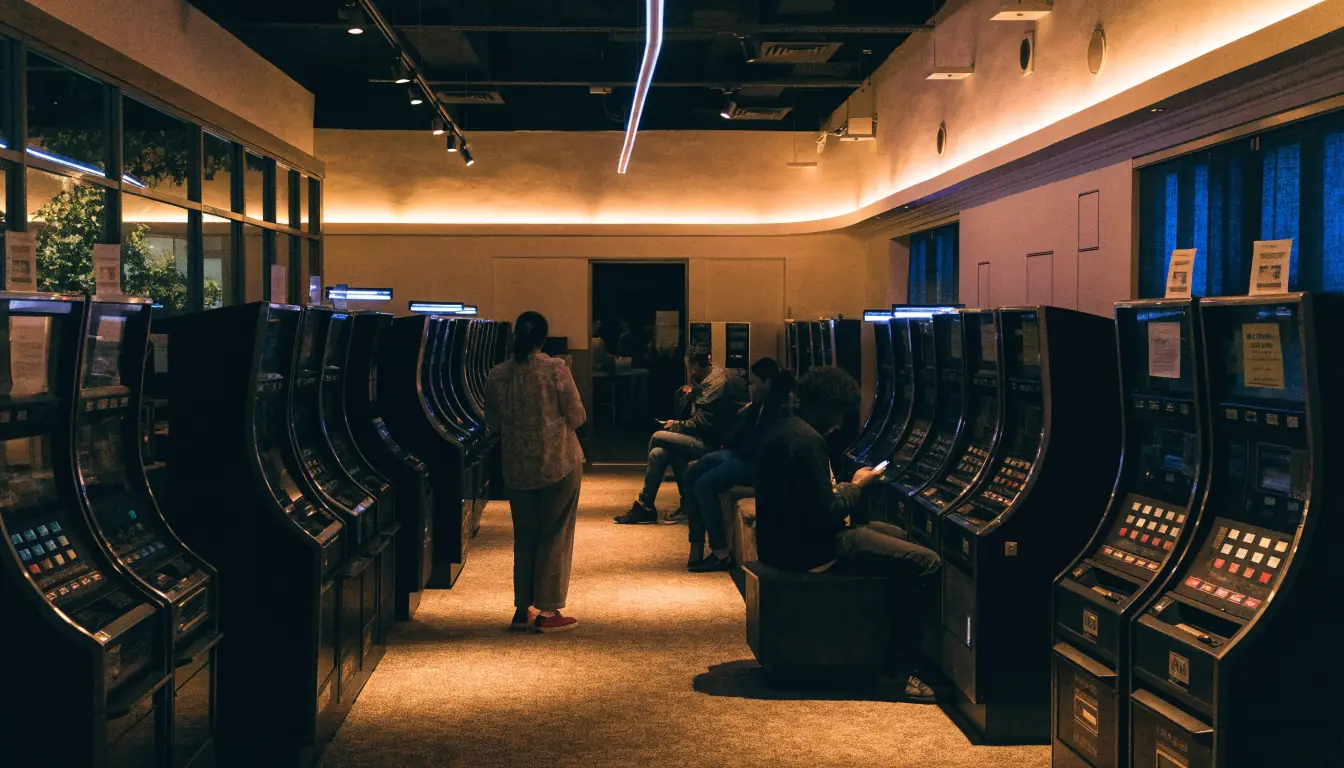
“Twenty-four-hour” can also be used loosely in listings or descriptions. It may refer to another service, continuous venue access, or an outdated entry rather than uninterrupted access to pokies. Treating the phrase as a guarantee converts an unverified description into a travel plan.
The useful answer to a late-night opening-hours question is therefore venue-specific and current. A general result for Geelong cannot establish that any particular location offers pokies around the clock, and no city-wide schedule should be inferred from the wording of a listing. A direct confirmation is the only practical basis for deciding whether a visit at a particular hour is worthwhile.
Crown Casino and Geelong: What the Verified Information Establishes
A Crown-related name does not, by itself, establish that a Crown venue operates in Geelong. Nor does a phrase linking Crown, Geelong and pokies confirm that a particular room, machine selection or cash-payout arrangement exists. Those are separate claims, and each needs evidence specific to the venue being described.
The distinction matters because a branded name can appear in a description without proving the location attached to it. A result may combine a casino brand with a city, or use the terms together for comparison. That wording is not the same as a confirmed local address. Without reliable venue identification, claims about “Crown pokies in Geelong” would turn an association of words into a statement of fact.
The same limit applies to descriptions of a pokies room. Calling a room the best in Geelong implies a comparison of identifiable local venues and their facilities. A ranking cannot be supported merely by a casino name or by a broad claim about the area. Any meaningful comparison would need to specify which venues are being assessed and what criteria are used. Without that foundation, “best” is a label, not a measurable result.
Attention Branded names like Crown do not confirm the existence of a specific venue, machine selection, or payout arrangement in a particular city.
Cash payout claims require particular care. The phrase “maximum cash payout” could refer to a machine’s stated prize, a venue’s payment procedure, or a limit imposed by another condition. Those are not interchangeable. A large advertised prize does not establish that the same amount is paid in cash at a particular location, and a venue name does not explain how a payout would be handled. No specific maximum can be assigned to a Geelong Crown venue on the basis of the name alone.
A precise description would separate three things: whether a Crown-branded venue is actually located in Geelong, whether it has pokies, and what payout terms apply there. Treating those as one assumption produces a confident-sounding answer without establishing any of its parts. The responsible wording stays narrower: Crown-related searches do not establish a Geelong venue, its pokies room, or a maximum cash payout. A local claim should be made only when the place and the relevant terms are independently identified.
CBD Clubs and Gaming-Machine Oversight
A club in Geelong’s CBD is not, by its name or location, evidence that pokies are available there. Any assessment of gaming-machine oversight starts with whether a venue operates machines, not with whether it is described as a club. The requirements below concern venues where machines are operating; they do not confirm that a particular CBD club has them.

A report on the changes says that, from 1 July, a venue operating more than 20 gaming machines is required to have a dedicated Responsible gambling officer (RGO) on duty while those machines are running. The threshold is about the number of machines at the venue, and the duty applies during operating periods. It is not a statement that every club must employ an RGO, or that an officer is present whenever a club is open.
The same report describes a requirement for venues to maintain a gambling incident register. It is intended to capture relevant occurrences, including signs that a patron may be experiencing gambling harm. This is a venue-level recordkeeping obligation, not a public rating of a club and not proof that an incident has occurred at any particular location. Its practical significance is that oversight includes recording concerns, rather than relying only on staff response at the time.
For someone comparing CBD clubs, those rules can clarify what to check if a venue confirms that it has gaming machines: whether the machine count brings the RGO requirement into play, and how the venue handles its incident-register obligation. Neither point establishes that a particular club has pokies, identifies its machine number, or ranks its games as the best in the area. Those conclusions require venue-specific information.
Self-exclusion is a responsible-gambling tool. It is distinct from the RGO and incident-register requirements: one concerns a person’s decision to exclude themselves from gambling, while the others concern venue staffing and records. The existence of a self-exclusion option does not, on its own, confirm which CBD clubs operate machines or how a particular venue administers the option.
Is every Geelong club required to have a Responsible Gambling Officer?
No, the requirement to have a dedicated RGO on duty applies specifically to venues with more than 20 gaming machines during machine operation.
Can I use PayID to play pokies?
PayID is a banking tool for transfers; it does not guarantee that a physical gaming machine or venue offers cashless payment via that method.
Does a “best-paying” claim guarantee a win?
No, RTP is a long-run statistical measure and does not forecast the results of an individual session.
The distinction matters when a search for Geelong clubs with pokies is treated as a shortlist. A club’s operating status, its machines and its application of oversight rules are separate questions. The reported requirements describe the framework for venues that meet the relevant conditions; they do not supply a venue list or establish that any named club qualifies.
Parkes and Other Place-Name Searches
A mention of Parkes alongside Geelong does not, by itself, identify a particular venue. The name could be intended as a local place reference, part of an address, or something else entirely. Treating it as a confirmed suburb, street or gaming venue would turn an ambiguous label into a claim it cannot support.
That distinction matters when comparing results for pokies in Geelong. A business name or place label is not evidence that a venue has pokies, and a result associated with the wider region does not establish that it is in the city. The same applies to descriptions such as “best pokies in Geelong”: they may be promotional wording rather than a substantiated comparison of venues or machines.
A useful check starts with the complete venue name and its address, not the isolated word Parkes. The address should match the intended area, and the venue itself should confirm whether it has gaming machines. If the reference cannot be tied to a named, identifiable venue, it is not a sound basis for choosing where to go.
This is a small distinction with a practical consequence: place names narrow geography only when they point to a location that can be identified. A vague association does not establish proximity, venue type or machine availability. Nor does repeating the word in different combinations make the underlying identification more certain.
For Geelong, the reliable unit of comparison is a specific venue with a confirmed address and confirmed facilities. Parkes, without that link, remains an unresolved label rather than a usable venue recommendation. A listing that supplies no clear address should not be treated as evidence that a particular Geelong venue exists there or offers pokies.

Cashless Payments: What PayID Does—and Does Not—Mean
PayID is a way to address a bank transfer, not a description of how a pokie accepts payment. It links a transfer to an alias such as an email address, mobile number or Australian Business Number (ABN), rather than requiring the sender to use the recipient’s account details. The service operates through Australia’s New Payments Platform (NPP), which is supported by all major banks and protects transfers with end-to-end encryption.
That explains what PayID does in banking. It does not establish that a physical gaming machine can take a bank transfer, that a venue has cashless gaming facilities, or that a particular payment method is available on site. A machine’s payment arrangements are a separate venue-level feature. The word “cashless” alone does not identify the technology or prove that PayID is accepted.
For searches about cashless pokies in Geelong, the useful distinction is between a bank transfer and a venue’s own machine-payment system. Confirmation needs to come from the venue, with the specific question being whether its gaming machines accept cashless payments and, if so, which method. A general reference to PayID or to banking support is not that confirmation.
The same distinction applies when place names are combined. A mention of Newcastle alongside Geelong does not establish that the same payment arrangements apply in both places, or that a particular venue in either location offers them. Payment methods can only be assessed for the venue and service actually named.
PayID’s connection to the NPP is a feature of the transfer network. It is not evidence about a gambling service’s licensing, fairness, or disclosure of game return settings. Those are separate matters, and payment branding cannot settle them. For a physical Geelong venue, the relevant point is narrower: PayID is a bank-transfer alias, while cashless access at a pokie depends on the machine and venue accepting that arrangement.
Published by the Crusino Casino team.