Best Casino in Perth: Hotel and Venue Guide
 Available in AU
A practical guide to verifying hotel offers, venue information and casino-related searches without treating unconfirmed details as fact.
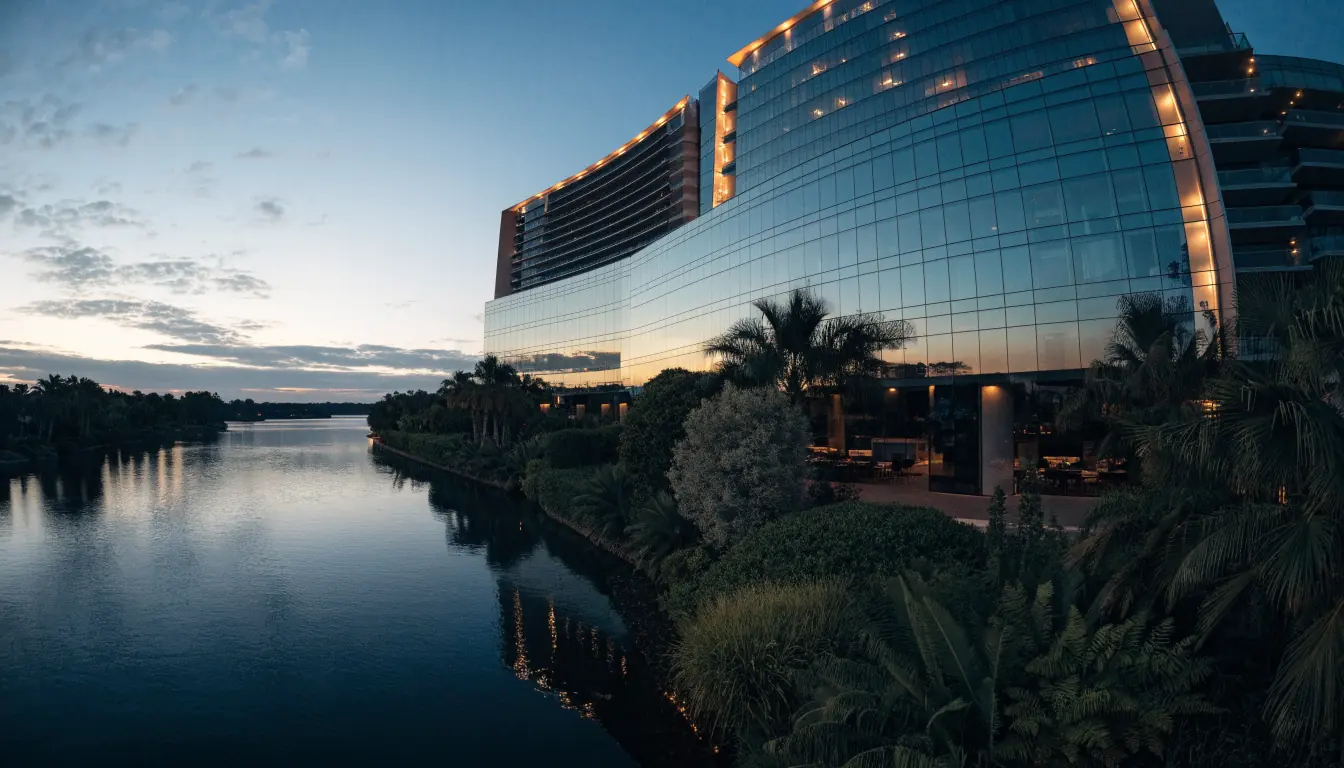
Table of Contents
- Hotel stays: what can be verified before booking
- Opening, development and entertainment information
- Staying near the casino: accommodation searches
- Getting in touch and checking venue details
- Breakfast, buffet searches and casino-related jobs
- Poker rooms, machines and the limits of the available information
- Spa, bars, address and venue policies
- Online casino searches and Australian access restrictions
- Restaurant searches and what is not verified
- Membership and poker-machine rules: keep NSW facts in scope
Hotel stays: what can be verified before booking
A Perth casino hotel stay should be treated as a specific accommodation purchase, not as an assumed extension of a casino visit. The phrase “casino hotel” does not, by itself, confirm that rooms are available on site. Nor does it establish a room category, a current rate or a package.
That distinction matters when a result appears to combine a hotel stay with casino access or another benefit. The wording of a promotion is not its final value. A usable offer needs to identify the property, the room being sold, the dates covered and the full amount payable. If any of those elements is absent, the apparent saving cannot be calculated. A headline discount without a comparable base rate is packaging, not a measurable deal.
Before treating any listing as a Perth casino hotel booking, the property itself needs to be identified as an on-site hotel rather than accommodation elsewhere in the city. The address and booking page should refer to the same property, and the confirmation should name the room and stay dates. Without that match, the phrase “casino hotel” may describe a search category rather than the place being booked. This section concerns a hotel attached to the casino, not other places to stay in the surrounding area.
Choosing an online casino while in Perth means checking the details that matter to you before signing up. This list provides a concise reference to the information available for each operator.
License: Curacao Golden Pokies is listed with a Curacao licence.
Payout speed: crypto ~90 minutes, fiat 1-5 days · Min. deposit: A$30 Kingmaker lists crypto payouts at around 90 minutes and fiat payouts at 1–5 days. Its minimum deposit is A$30.
License: Curacao – Antillephone N.V. (Versus Odds B.V.) · Min. deposit: EUR 20 Thor Casino lists a Curacao licence issued by Antillephone N.V. for Versus Odds B.V. Its minimum deposit is EUR 20.
License: Curacao eGaming (Roby Games Ltd) Roby Casino lists a Curacao eGaming licence held by Roby Games Ltd.
License: Curacao eGaming OGL/2023/174/0082 (Dama N.V.) · Min. deposit: A$15 LevelUp Casino lists a Curacao eGaming licence, OGL/2023/174/0082, held by Dama N.V. Its minimum deposit is A$15.
License: Curacao Gaming Control Board OGL/2023/176/0095 (Hollycorn N.V.) GoldenCrown lists a Curacao Gaming Control Board licence, OGL/2023/176/0095, held by Hollycorn N.V.
License: Curacao eGaming (Dama N.V.) JeetCity Casino lists a Curacao eGaming licence held by Dama N.V.
License: Curacao Gaming Control Board (TechSolutions Group N.V.) Bizzo Casino lists a Curacao Gaming Control Board licence held by TechSolutions Group N.V.
License: Curacao · Min. deposit: A$20 (POLi) Lucky Dreams lists a Curacao licence and a A$20 minimum deposit via POLi.
Payout speed: crypto under 1 hour, PayID 1-3 business days · Min. deposit: A$20 (A$30 to qualify for the bonus) Ricky Casino lists crypto payouts under an hour and PayID payouts in 1–3 business days. Its minimum deposit is A$20, or A$30 to qualify for the bonus.
The room description should also be specific enough to compare. A label such as “standard room” is not a complete basis for a decision unless the booking states what is included and the conditions that apply. The final amount should be checked against the selected dates, rather than inferred from a promotional starting price. Any extra charge, required deposit or condition affecting the total should be visible before payment. If the booking does not make the amount payable clear, the deal cannot be assessed on price.
Cancellation terms alter the effective cost. A lower rate can be less valuable if it cannot be refunded or changed when plans shift; a higher rate may carry different conditions. The booking details should state the cancellation deadline, any fee, and whether a deposit is returned. These are not minor footnotes. They determine how much of the quoted price remains at risk once a reservation is made.
“Inclusions” also needs a precise definition. Breakfast, parking, late checkout or casino-related benefits should not be assumed from a package name or an image. Each claimed extra has value only if it is written into the booking conditions and applies to the selected dates and room. Otherwise, its value in the comparison is zero. A room rate and a bundle are comparable only after their inclusions and restrictions have been set out on the same basis.

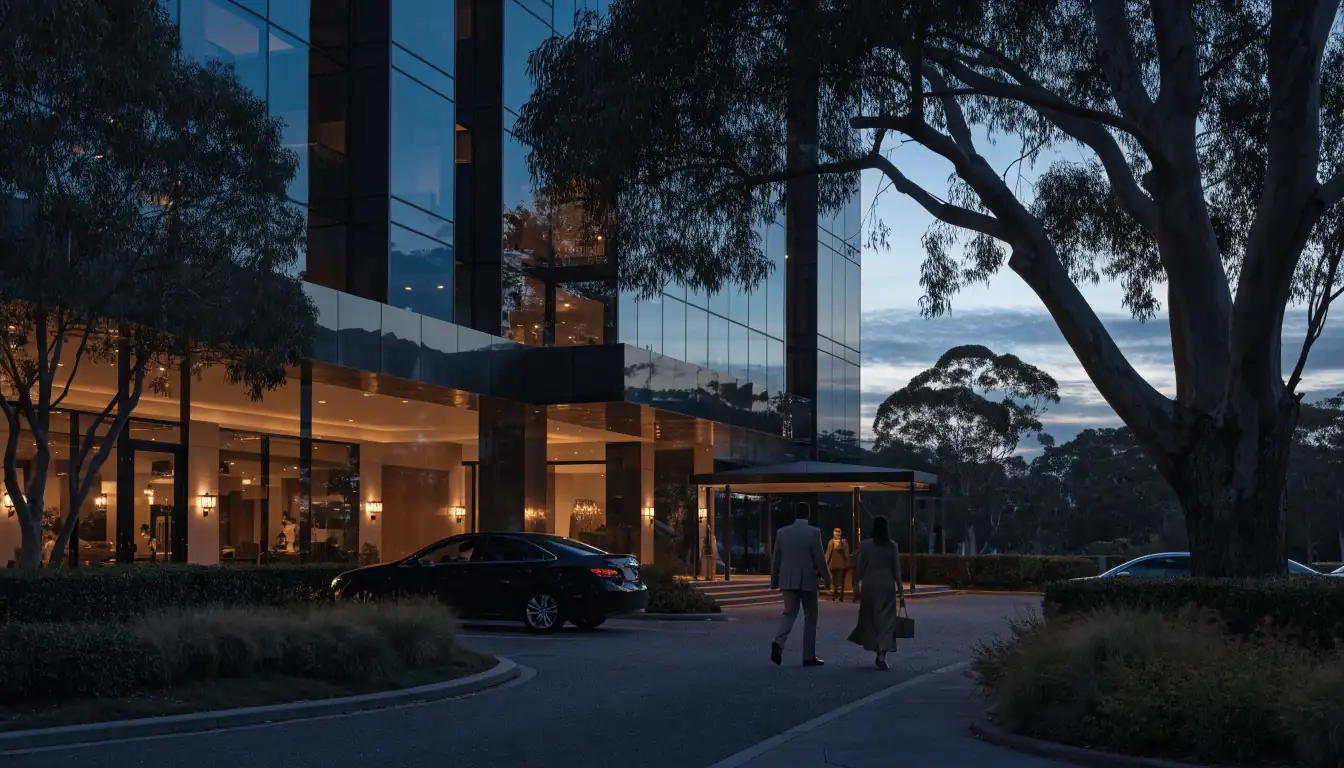
For a Perth casino hotel deal, the practical calculation is therefore simple: identify the on-site property, confirm that the room is actually bookable for the intended dates, then compare the total payable and the conditions attached to it. A rate that cannot be tied to a named room and stay period is not a usable quote. A promotion that leaves cancellation or inclusions unclear has an unknown cost, even if its headline looks low.
Opening, development and entertainment information
A casino’s public operating status, a reopening date and a development proposal are separate questions. The first concerns whether the venue is receiving visitors now; the second concerns a change after a closure; the third may refer to planning or construction rather than a change in public access. Treating them as interchangeable can turn an announcement about a project into an assumption that the venue has reopened.
For Perth, a date or status should be tied to a specific, current statement from the venue or an appropriate public authority. An old announcement may describe an intention, a proposal or work scheduled at the time, not the position today. The distinction matters because plans can change before they affect public operations. A development headline, by itself, does not establish a completion date or a new opening arrangement.
Opening information can refer to a general venue status, a specific service, or a one-off event. Always check the date and scope of the announcement to ensure it applies to your visit.
Opening information also needs a clear time context. “Open” can refer to the venue generally, a particular service or an event on a particular date. Those are not equivalent. An advertised function does not necessarily establish ordinary public access, and a past operating schedule does not settle today’s hours. Where a current schedule is published, the relevant detail is its date and scope; otherwise, no precise opening time should be treated as dependable.
Reopening language calls for the same care. A reopening may mean a return after a temporary interruption, a staged resumption of services or a future plan. Without a dated statement that says what is reopening, the word alone supplies neither a confirmed date nor the extent of public access. A change in one part of a venue should not be read as confirmation that every public operation has resumed.
Entertainment and events are similarly time-sensitive. A listing needs to identify the event, its date and whether it is open to the public; a general entertainment reference does not amount to a current programme. Past event material can indicate what was once scheduled, but it cannot establish what is coming next. Cancellations, changes and ticket conditions can affect the practical value of an announcement, so a dated listing is more useful than an undated description.
Development information belongs to a different evidence category from event notices. A project can be proposed, approved, underway or complete, and each stage has a different meaning. A proposal does not prove construction has begun, while construction does not establish when or how public operations will change. Claims about scale, timing or employment should therefore be attached to a specific project statement rather than inferred from the word “development”.
Employment references also need a defined scope. A general statement about a venue or project does not confirm that a position is currently available. A vacancy is a dated operational notice, with its own role, terms and application status. The existence of development activity, if announced, would not by itself establish a current recruitment round or a particular number of jobs.
The useful standard is simple: match each claim to the question it actually answers. A current opening notice addresses access at a stated time; a reopening announcement addresses a stated change; an event listing addresses a specific programme item; and a project update addresses a development stage. None should be used as a substitute for the others. Without a date and a clearly defined subject, confident wording adds no usable information. The calendar, in this matter, is part of the claim.
Staying near the casino: accommodation searches
A stay near a casino is a separate booking decision from a room inside the venue. The useful comparison is not the label “nearby” but the full journey between the accommodation and the intended destination, measured against the price and conditions of the stay. Without a confirmed property and route, a distance claim would be decoration rather than planning information.
Location should be checked on a map against the venue’s exact address, then considered in practical terms: the route, transport options and expected travel time at the hours of the visit. A property can appear close on a map while still requiring a less convenient route. Search results and booking listings may also use “Perth” broadly, so the city label alone does not establish proximity.
- Check the total payable amount including all mandatory charges.
- Compare rates for the exact same dates and number of guests.
- Verify cancellation terms and refund conditions.
- Assume a lower headline rate is a better deal without checking restrictions.
- Rely on broad city labels like “Perth” to confirm proximity to a venue.
- Treat a “nearby” label as a confirmed route or distance.
The price shown first is not necessarily the amount that matters. Compare the total for the same dates and number of guests, including any mandatory charges shown before payment. Check whether the displayed rate is refundable, when cancellation becomes costly, and whether payment is due at booking or later. A lower headline rate can carry a tighter cancellation condition; the difference is a real cost if plans change.
“Deals” require the same arithmetic. A promotion is useful only if its conditions fit the stay: eligible dates, minimum stay requirements, included services, and cancellation or payment terms. The word “promotion” does not establish a saving. Compare the final payable amount with the standard rate for identical dates and conditions, rather than treating a crossed-out price or percentage claim as proof of value.
An offer associated with a casino name may concern the venue rather than accommodation nearby. It should not be assumed to include a room, transport, meals or access to facilities unless the booking terms say so. The reverse is also true: a hotel promotion does not automatically include anything at the casino. Each component needs to be priced and described in the actual offer.
Accommodation listings may mention food, a pool or other amenities, but those are property-specific claims, not evidence of facilities at the casino. They should be checked on the accommodation provider’s listing and against the booking conditions. A photograph or search summary is not a substitute for confirmation that an amenity is available during the dates of the stay.

For a practical comparison, keep the same dates and occupancy across listings, record the complete price and cancellation terms, and compare the route to the venue separately from the room itself. That prevents a low rate from obscuring a longer journey or a restrictive booking condition. The result is a like-for-like cost comparison, not a ranking based on a vague promise of being close.
Accommodation around Perth can be assessed on those terms without treating a casino-related label as a guarantee of location or value. A booking is defined by the property, its address, the dates, the payable total and the conditions attached to that rate. Until those elements are clear, “near the casino” describes a search category, not a confirmed saving.
Getting in touch and checking venue details
A contact number, map pin or venue listing is useful only when it corresponds to the property and is current. Search results can preserve old details after a phone line, entrance or service arrangement changes. For a practical decision, the relevant record is the venue’s own current contact information, not a number copied across directories. Where details conflict, a third-party listing should not be treated as confirmation.
Attention Third-party directory listings may contain outdated phone numbers or incorrect entrance details. Always verify contact information through the venue’s own official channels.
Contact searches often combine a broad venue name with a request for a telephone number. That can return unrelated businesses, outdated directory entries or contact details for a particular department rather than general enquiries. Before relying on a number, check that the listing identifies the intended Perth venue and that the contact channel is presented as current by the venue itself. An unanswered call or an old listing does not establish that a service is unavailable; it establishes only that the channel has not resolved the question.
A map is a starting point for locating an entrance, not a complete access plan. A pin may mark a large property without identifying the door relevant to a particular service. Directions, vehicle access and pedestrian access are separate details. The same distinction applies to a car park: a map label does not establish that parking is available to the public, whether conditions apply, or where drivers should enter. Those terms need to be checked directly before a trip, especially where timing or access affects the decision.
The same standard applies to a bar. A venue name attached to a bar listing does not, by itself, confirm that the listing is current or that the bar is operating at a particular time. Service details can change independently of a venue’s general contact information. A current venue notice is more useful than a cached directory description; where the distinction matters, confirmation should be obtained through a current venue channel rather than inferred from a map marker.

Concert information requires an additional check because an event listing may describe a past performance, a separate site or a promoter’s announcement. A venue association is not proof that a concert is scheduled there now. Dates, ticket arrangements and access instructions should be matched to a current event notice before travel is planned. This is a verification issue, not a reason to assume that a programme exists or that a listing remains valid.
Queries about baccarat or craps concern gaming availability, but a game name in a directory entry or review is not evidence of a current table, session or operating arrangement. Venue details and game information are different records and can change on different schedules. A decision that depends on a particular game needs direct, current confirmation; a general map or contact page cannot settle it.
The practical test is simple: identify the exact service, find a current venue-issued detail that addresses it, and do not fill gaps with assumptions from third-party listings. A telephone number can confirm a question, a map can orient a route, and an event notice can identify a performance. None substitutes for the others.
Breakfast, buffet searches and casino-related jobs
Breakfast and buffet questions need to be treated as service details, not inferred from the word “resort” or from a venue’s casino status. A breakfast buffet, if offered, would have its own conditions: service hours, location, booking arrangements, inclusions and price. None should be assumed from a general description of the venue. The same applies to a buffet at another time of day; the word alone says nothing about what is served or when.
Understanding Breakfast and Buffet Claims
Breakfast and buffet offerings are specific service details. Do not assume they are included in a “resort” or “casino” package unless explicitly stated in the booking conditions. Each claimed extra only has value if it is written into the terms for your selected dates and room.
That distinction matters when comparing a meal with a room package. A hotel stay does not, by itself, establish that breakfast is included, and a buffet search does not confirm that a meal is attached to a booking. The final cost depends on the stated package terms, not on the proximity of dining and accommodation. Until those terms are set out for a particular date, there is no sound basis for treating breakfast as included or assigning a price to it.
“Casino resort” is similarly broad. It may describe a category of property, but it does not settle whether meals, rooms or other facilities are available under a specific arrangement. A rewards programme also has to be assessed by its written conditions: eligibility, what activity earns benefits, how those benefits can be used and any expiry or exclusion rules. A programme name or membership prompt is not a monetary value. Without the rules and a usable benefit, it cannot be counted as a saving.
Employment and the value of a vacancy
Employment searches call for a different calculation. A current job listing should identify the position, employer, location, duties, employment basis and application process. Pay, hours and conditions belong to the vacancy particulars or the employment offer; they cannot be inferred from the casino sector or from a job title. A role connected with a casino may also sit with a hotel, food service, security, administration or another business function, so the actual employing entity matters.
A vacancy page is useful only while it represents an open position. A saved or copied listing may remain visible after applications close, and a generic careers page does not prove that a particular role is available. Before treating a position as current, the listing should state its status and provide a route to apply. Employment claims should not be confused with an invitation to gamble: a job is a contract for work, with terms that need to be evaluated independently of any venue membership or promotion.
The practical standard is straightforward: meals require service details; rewards require written rules; employment requires a live vacancy and clear conditions. Labels such as “buffet,” “resort,” “rewards” and “jobs” do not substitute for those terms. Where a price, inclusion or employment condition is not stated, it should not enter the comparison as though it were settled.
Poker rooms, machines and the limits of the available information
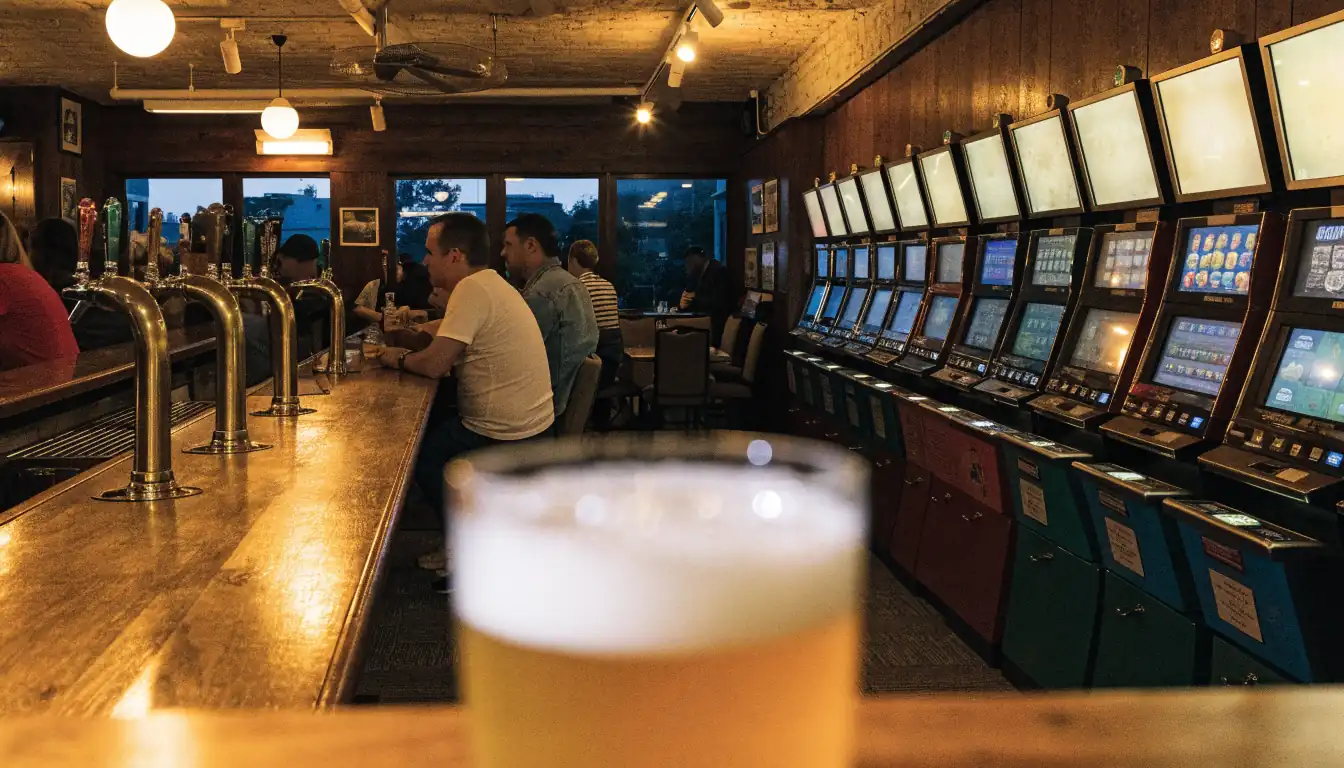
Poker, poker tournaments and Electronic Gaming Machines (EGMs) are separate offerings. A poker room refers to a space for table play; a tournament requires scheduled competition and published entry conditions. EGMs are a different form of venue gaming. None of these terms, on its own, establishes what is available at a particular Perth venue.
A useful description of a poker room would distinguish cash games from tournament play and state the applicable entry conditions. Tournament information would need to identify the event, its date, registration process and rules. Without those particulars, a general reference to poker does not establish that a tournament is scheduled or that a room is operating. The same applies to searches for Perth casino rooms when “rooms” means poker facilities rather than hotel accommodation: the intended amenity needs to be clear.
Electronic Gaming Machines (EGMs)
Physical gaming machines found on a venue’s gaming floor. These are distinct from online pokies, which operate using a Random Number Generator (RNG) and do not reflect the availability or mechanics of on-site equipment.
Machine-related information also needs to be tied to the venue and its operating conditions. Online pokies are not evidence of on-site EGMs, and their mechanics do not describe a physical gaming floor. Each online pokie uses a Random Number Generator (RNG). Its spins are independent: the RNG does not keep a record of prior outcomes, so a previous result does not change the next one. That explains how an online game works, not which machines a Perth venue offers.
The NSW position should not be transferred to Western Australia. Club Liverpool’s standing and NSW rules concern that state; they do not establish machine numbers, entry requirements or play conditions in Perth. State-specific facts are not interchangeable simply because the same type of gaming is involved.
Searches for a sports bar, coffee shop or gym alongside casino rooms point to other amenities, not poker facilities. Each needs its own description. A bar is not a poker room, a coffee shop is not evidence of a tournament service, and the presence of gaming would not establish that a gym is part of the venue. Combining several amenity labels in a single description can make the place sound more fully specified than the underlying details warrant.
For a practical comparison, the relevant record is the venue’s current information for each facility: whether it exists, what it offers and any conditions attached to access. Poker schedules can change, while gaming equipment and other amenities are distinct categories. A broad phrase such as “casino facilities” cannot substitute for those particulars. Nor does the word “rooms” settle whether the reference is to hotel accommodation or a dedicated poker area. Clear naming matters; otherwise, an assumption about one facility can be mistaken for confirmation of another.

Spa, bars, address and venue policies
A Perth casino visit can involve several separate checks: where the venue is, whether a particular bar or spa is operating, and what conditions apply at the entrance. These are not interchangeable details. An address identifies a destination; it does not confirm that a requested service is available or that its terms suit a planned visit.
Before setting out, confirm the venue’s address through an official channel and compare it with the destination shown in any travel or mapping service. A listing can be out of date or refer to a different entrance. Where timing matters, check that the address and access information apply to the intended visit rather than relying on a saved pin or an old listing.
Bar information should be treated as venue-specific and time-sensitive. A reference to a bar does not establish its current operating status, service times, entry conditions or whether reservations are accepted. Those details should be checked directly before making plans around a particular venue or service. This avoids building an itinerary around a name that may not match current operations.
A spa requires its own checks. The relevant questions are whether spa services are offered at the venue, what treatments are available, and what booking and access conditions apply. A hotel or casino association alone does not establish that a day spa operates on site. Confirm the service itself, not just the venue name, before treating it as part of a visit.
Venue Entry Checklist
- Confirm the exact venue address through official channels.
- Check the specific operating hours for the bar or spa.
- Verify the current dress code policy for your arrival time.
- Confirm if reservations are required for your chosen service.
Dress requirements are also separate from access details. A general expectation of smart or casual clothing is not a confirmed policy. Any posted entry rules may vary by area or occasion, so the practical check is the current venue policy for the intended destination and time. If a rule is unclear, obtaining confirmation before arrival is more useful than relying on assumptions drawn from another venue.
These checks are operational rather than promotional. The useful outcome is a confirmed address, a service that is actually available, and clear entry conditions; without those, a bar or spa reference has little planning value. No venue-specific address, bar, spa or dress-code detail should be treated as current unless it is confirmed directly by the venue.
Online casino searches and Australian access restrictions
A request for the best casino in Perth can refer to a physical venue, while wording about online play points to a different service and a different legal question. The two should not be treated as interchangeable. A Perth venue’s existence does not establish that an online casino operating under its name is available or lawful for people in Australia.
The Interactive Gambling Act 2001 prohibits operators from providing real-money online casino games to people physically located in Australia. That restriction covers pokies, blackjack and roulette. An Australian-run operator therefore cannot lawfully offer those games to customers in Australia. A name, licence claim or Perth reference in an online listing does not change the rule.
What regional blocking means
Online platforms may use a player’s IP address to estimate the country from which a connection is made. An operator or software provider can then restrict access to particular games or providers for that location. A blocked game may not appear in the lobby; a game that is listed may also fail to load if a location restriction applies.
This is an access control, not proof that a service is authorised in Australia. A platform’s ability to display a page, accept a registration or show a game title does not establish that it may provide real-money casino play to someone in Perth. Nor does a Perth-related name establish a local casino licence for online services.
Searches combining Perth with bingo, dining or lunch can also blend physical-venue information with online casino results. Those terms do not establish that a Perth venue offers an online product, or that its food and gaming services operate through the same channel. Venue details and online gambling legality require separate checks.
The distinction matters when assessing claims about a casino licence. The Interactive Gambling Act concerns the operator’s provision of prohibited online services to people in Australia; a foreign licence, where claimed, does not make that provision lawful under Australian law. The legal position is not resolved by a site’s own description of its authorisation.
Australian Online Restrictions
The Interactive Gambling Act 2001 prohibits operators from providing real-money online casino games to people physically located in Australia. This restriction applies to pokies, blackjack, and roulette regardless of the brand’s name.
Online access can also be affected by decisions made by individual operators and game providers, so availability may differ by location and change over time. An inaccessible title is not necessarily a technical fault, and repeated attempts do not establish permission to play. The practical boundary is straightforward: online casino games are not a lawful service for operators to provide to people in Australia, regardless of whether a Perth venue appears in the wording or branding.
Restaurant searches and what is not verified
Restaurant searches associated with a Perth casino can refer to several different things: a dining venue inside the property, a restaurant elsewhere in the surrounding area, or a place that appears in a general map or directory result. Those categories are not interchangeable. A listing that mentions the casino area does not, by itself, establish that a restaurant is operated by the venue or located within it.

That distinction matters most when a result is used to plan a meal around a visit: the restaurant’s location, service and terms need to match the intended plan.
A useful restaurant listing should make its basic terms visible. The venue name and address identify where the meal is served; a current menu shows what is offered; prices establish the likely spend; and dated opening information indicates when service is scheduled. Booking requirements, cancellation terms and any service charges affect the final cost or whether a table can be secured. Without those details, “restaurant” is only a category, not a usable offer.
The same care applies to broad descriptions such as “dining at the casino”. That wording may group several businesses together or refer to an area rather than a single operator. It does not establish that every listed venue is on site, currently trading, or included in any casino-related package. Restaurant names and menus can also change, so an old directory entry should not be treated as current simply because it remains visible.
Searches for restaurants near a casino require a separate location check. A nearby result is not evidence of an on-site restaurant, and proximity alone says nothing about walking access, opening hours or prices. Those details should not be inferred from a venue’s name or from a map pin.
Membership and poker-machine rules: keep NSW facts in scope
Membership, opening status and gaming facilities are separate matters. A membership offer does not, by itself, establish access to poker machines, and a venue’s current opening status cannot be inferred from a membership listing.
It has the largest number of operational poker machines among clubs in that state. That ranking is confined to NSW clubs; it says nothing about the number of machines at a Perth casino or at any other Western Australian venue. A club comparison is not a Perth inventory.
NSW rules also have a defined scope. The minimum legal age for gambling on poker machines there is 18. NSW requires pre-commitment systems in which players set a loss limit before play. These are state-specific rules, not evidence of the membership process, age checks or machine controls at a Perth venue. Applying them to Western Australia would turn jurisdiction into guesswork.

For a Perth casino membership, the useful terms would be the actual eligibility conditions, any fee, the benefits attached to enrolment and whether those benefits depend on gaming activity. Without those terms, membership cannot be priced or compared on a reliable basis. A headline benefit is not a net value: any fee or qualifying condition changes the calculation.
Likewise, “open now” is a time-sensitive status, not a general property of a venue. It requires a current operating-hours source for the relevant Perth location. An older listing or a NSW club’s operating information cannot settle it.
Poker at a Perth casino should also be distinguished from poker-machine gambling. The phrase may refer to a card game, while NSW pre-commitment rules described here concern poker machines. They are not interchangeable categories, and the NSW machine rules do not establish what games or membership arrangements exist in Perth.
What does the legal status of offshore online casinos and NSW gambling law say?
Australian-based operators cannot offer online casino games such as pokies, blackjack and roulette to people in Australia. It is technically not illegal for Australian players to use offshore casinos, but those platforms are not regulated under Australian law; in NSW, poker-machine gambling is restricted to people aged 18 or over, with mandatory pre-commitment loss limits.
What features should I look for when choosing an online pokie?
Check the RTP, which estimates the share of wagers returned over a very large number of spins, and remember that every spin is independent because the game uses an RNG. Also check the terms for bonuses or free spins: winnings may need to be wagered before withdrawal.
How does region blocking work?
Casinos or game providers can use a player’s IP address to identify their apparent location and block access from excluded countries. A blocked game may not appear in the lobby or may fail to load.
Prepared by the Crusino Casino editorial staff.