Pokies in Sydney: Checking Venues and Locations
 Available in AU
Proximity, opening hours and area names do not confirm a suitable venue; each detail needs to be checked before planning a visit.

Table of Contents
- Finding Pokies Near Sydney: What Proximity Can and Cannot Tell You
- Online Pokies and the Limits of the Australian Market
- Opening Early: What Sydney Pokies Searches Can Establish
- Comparing Pokies Without Treating Returns as a Promise
- Airport and North Sydney Searches: Separate the Areas, Verify the Venue
- Crown Sydney Searches: What Can Be Confirmed
- Sydney Pokies Venues and Their Operating Responsibilities
- Twenty-Four-Hour Pokies: Availability Must Be Checked, Not Assumed
- CBD Clubs and Pokies: Venue Details Need Verification
- Parkes and Sydney Searches: Resolve the Location Before Comparing
Finding Pokies Near Sydney: What Proximity Can and Cannot Tell You
A nearby result is a starting point for checking location, not proof that a suitable venue is operating there. A map pin may refer to a business listing, an old entry or a broad area rather than a confirmed pokies venue. For a trip, the useful information is the venue’s exact address and whether that address, its operating status and the route can all be confirmed independently.
“Near Sydney” also depends on where the journey begins. Someone staying in the CBD, arriving at Sydney Central or travelling from an outer suburb will not mean the same thing by nearby. A result described as close to Sydney may still involve an inconvenient route or a longer journey than its label suggests. Distance on a map is only one part of the calculation; travel time and the practical route matter more when the visit has a fixed purpose.
Start with the destination, not the label
A search for pokies near Sydney, NSW can return results associated with the city, the wider metropolitan area or a loosely defined location. The name alone does not establish how close a venue is to a particular starting point. Before making plans, confirm the full street address and compare it with the intended origin. A venue’s own current listing is more useful for that check than a short map label.
Choosing a pokie site in Sydney means checking the details that matter to your play, including licensing, payment options, and minimum deposits where these are stated. This list offers a concise reference to the available information for each operator.
License: Curacao Golden Pokies is listed with a Curacao license.
Payout speed: crypto ~90 minutes, fiat 1-5 days · Min. deposit: A$30 Kingmaker lists crypto payouts at around 90 minutes and fiat payouts in 1–5 days. Its minimum deposit is A$30.
License: Curacao – Antillephone N.V. (Versus Odds B.V.) · Min. deposit: EUR 20 Thor Casino lists a Curacao license held by Antillephone N.V. (Versus Odds B.V.). Its minimum deposit is EUR 20.
License: Curacao eGaming (Roby Games Ltd) Roby Casino lists a Curacao eGaming license held by Roby Games Ltd.
License: Curacao eGaming OGL/2023/174/0082 (Dama N.V.) · Min. deposit: A$15 LevelUp Casino lists a Curacao eGaming license, OGL/2023/174/0082, held by Dama N.V. Its minimum deposit is A$15.
License: Curacao Gaming Control Board OGL/2023/176/0095 (Hollycorn N.V.) GoldenCrown lists a Curacao Gaming Control Board license, OGL/2023/176/0095, held by Hollycorn N.V.
License: Curacao eGaming (Dama N.V.) JeetCity Casino lists a Curacao eGaming license held by Dama N.V.
License: Curacao Gaming Control Board (TechSolutions Group N.V.) Bizzo Casino lists a Curacao Gaming Control Board license held by TechSolutions Group N.V.
License: Curacao · Min. deposit: A$20 (POLi) Lucky Dreams lists a minimum deposit of A$20 via POLi, as well as a Curacao license.
Payout speed: crypto under 1 hour, PayID 1-3 business days · Min. deposit: A$20 (A$30 to qualify for the bonus) Ricky Casino lists crypto payouts in under 1 hour and PayID payouts in 1–3 business days. The minimum deposit is A$20, or A$30 to qualify for the bonus.
Searches centred on Sydney Central or the CBD narrow the intended starting area, but they still do not verify a venue or its distance. “Near” has no fixed boundary in ordinary listings. Two results can use the same wording while referring to different travel conditions. The address is the concrete detail; the adjective is not.
For “near me” results, device location can help sort results around the point being used, but it does not certify that the listing is current or that the venue offers the service being sought. Location sorting answers a limited question: what has been placed close to this point? It does not answer whether the listing is accurate, whether the premises are open, or whether the trip is worthwhile.
When the starting point is Sydney Airport
Airport-related wording identifies a point of departure or arrival, not a confirmed nearby option. A result mentioning Sydney Airport should not be treated as evidence that a venue is inside the airport, directly beside it or reachable by a simple transfer. Those are separate location claims and need separate confirmation.
The sensible comparison is between the airport address and the venue’s stated street address, followed by a check of the route for the intended time of travel. A map estimate can assist with planning, but it cannot replace confirmation that both endpoints are correct. If the listing provides only a neighbourhood or a broad “near the airport” description, it does not supply enough detail to calculate the journey reliably.

The same discipline applies to searches using “open now”. A live label may be useful as a prompt to check current status, but it is not a substitute for confirmation from the venue. Opening information can change, and a search result’s timestamp or status may not reflect what is happening at the premises. That makes the label a weak basis for setting out without checking.
Keep the location specific
Sydney-related wording can also be confused with places that share a name or sit in a different state. A mention of Sydney, Victoria, for instance, should not be read as a Sydney, New South Wales destination without checking the full address. State and suburb details matter because a familiar place name does not establish which location a listing describes.
Likewise, an online result does not become geographically nearby merely because it is returned for a Sydney location. The word “near” may describe the search context rather than a physical venue. Whether an online service is lawful or available is a separate issue; proximity alone cannot establish either.
For a practical decision, the minimum useful sequence is straightforward: identify the exact place intended, confirm the venue’s address and current status, then assess the route from the actual starting point. A result can help with discovery, but it cannot supply those checks by implication. When the address or status remains unclear, the apparent convenience has not yet been established.
- Confirm the full street address of the venue.
- Compare the venue’s listing with your intended origin.
- Check the specific availability of the gaming area.
- Rely on broad labels like “near Sydney”.
- Assume a venue is open based on general business hours.
- Trust a map pin as proof of an operating venue.
Online Pokies and the Limits of the Australian Market
A search for online pokies linked to Sydney can blur two separate issues: what the law permits operators to offer and what legal consequences apply to an individual player. Under the Interactive Gambling Act 2001, companies cannot provide real-money online pokies to people in Australia without a domestic licence. No such licences have been issued, so there is no Australian-licensed online casino.
The restriction is directed at operators, not individual players. Australians are not subject to player penalties simply for playing on an offshore site that accepts them. That distinction does not make an offshore casino locally regulated, however, or give a player Australian legal protection if a dispute arises.
The practical exposure is clearest when a site withholds winnings. An Australian player has no legal recourse in Australia against an offshore casino that refuses to pay. A balance shown on a screen is therefore not equivalent to money recoverable through a domestic licensing system. Searches for real-money play, cashless options or high betting limits do not change that underlying risk; payment convenience and betting terms are separate from legal status.
A “no-deposit” offer also needs to be read as a set of conditions, not as cash available for withdrawal. The headline amount says little about the amount of wagering required before winnings can be withdrawn. A specialist review uses a wagering requirement of 35 times or less as a comparison benchmark and describes anything above 40 times as punishing; those are that review’s assessments, not legal standards or a guarantee of fair treatment.

The arithmetic makes the distinction concrete. At a 40-times wagering requirement, a $500 bonus tied to the bonus alone requires $20,000 in qualifying bets before withdrawal. If a requirement instead applies to a $500 deposit plus a $500 bonus at 35 times, the calculation is $1,000 multiplied by 35, or $35,000 in bets. The second headline can look larger while requiring more turnover. The base used in the calculation matters as much as the multiplier.
Terms can also specify which activity counts toward turnover and what happens if conditions are not met. A bonus balance may be restricted until the wagering is complete, and a site may set other withdrawal conditions. Those details need to be assessed alongside the operator’s offshore status: completing a calculation does not create Australian legal recourse if payment is later refused. A large offer is packaging; the turnover requirement is the payable cost in play.
The same distinction applies to searches for a Sydney casino online or a no-deposit offer associated with Sydney. Location wording does not establish that an online casino holds a domestic licence, and a payment method does not establish licensing, fairness or transparent terms. Nor does the law create a local online equivalent of a physical venue. Online access and Sydney’s in-person venues are different matters.
Legal Risk
Offshore online casinos are not locally regulated, meaning you have no legal recourse in Australia if winnings are withheld.
The financial comparison is therefore not simply between a smaller and a larger bonus. It is between the stated offer, the wagering base, the multiplier, the withdrawal conditions and the absence of an Australian legal remedy against an offshore operator. If a term cannot be translated into a clear turnover figure, the advertised value cannot be reliably measured.
Opening Early: What Sydney Pokies Searches Can Establish
A request for pokies open early in Sydney is a question about a venue’s operating hours, not a guarantee that a suitable venue exists. Searches mentioning a 6am or 7am opening identify the time being sought; they do not establish that the pokies area is open then. A venue name appearing beside an early time is a lead to verify, not confirmation.
The distinction between a building’s opening time and access to its pokies matters. A hotel, club or other venue may publish general business hours without stating when its gaming area is available. A café or reception desk opening early would not, by itself, show that pokies are operating. The relevant detail is the stated availability of the gaming area at the required time.
Check the hours that apply to the pokies
A useful confirmation should identify the venue and specify that its pokies are available from the intended opening time. A general listing that says “open” can be too broad: it may refer to the premises, a particular service or a schedule that has changed. If the information does not separate those details, the early start remains unconfirmed.
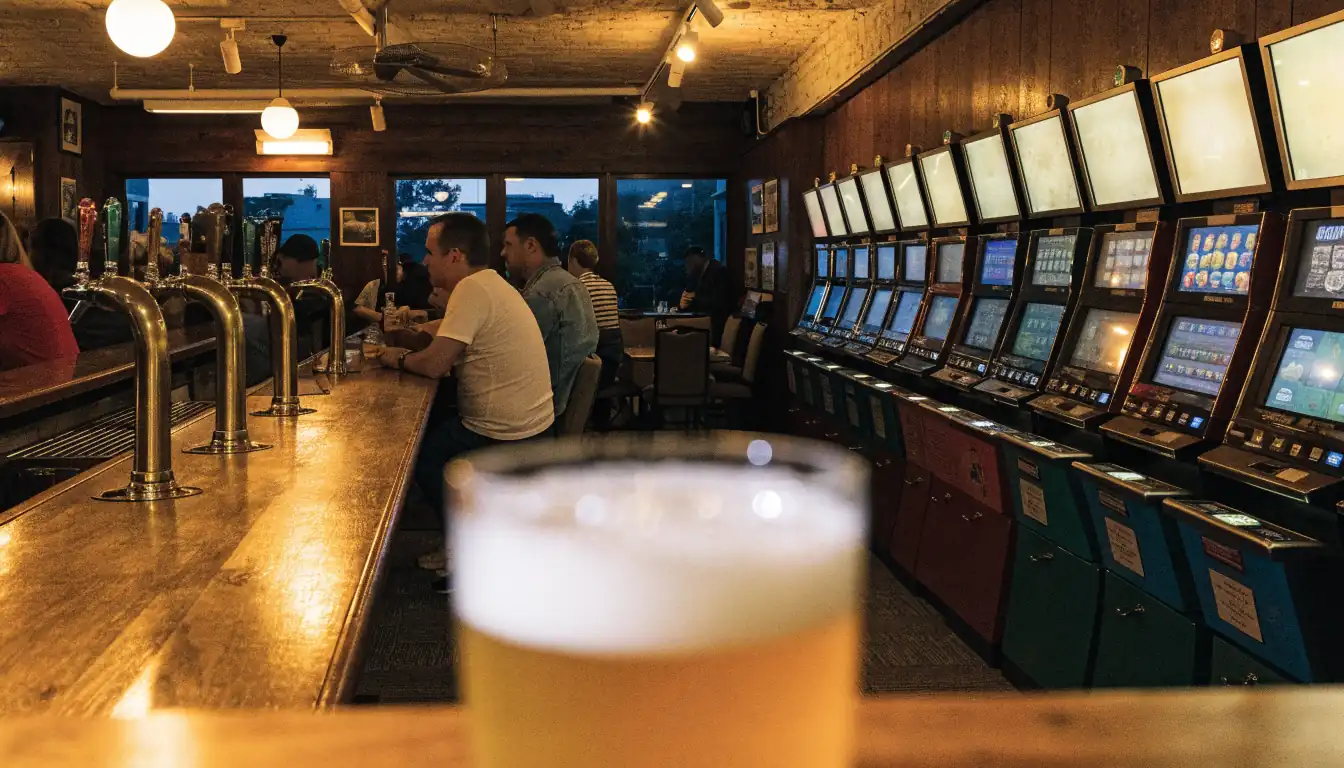
The most reliable practical check is a current venue-published schedule or direct confirmation from the venue. The wording should answer the actual timing question, rather than simply repeat that the venue is open. If the available information is ambiguous, asking whether the pokies area is operating at 6am or 7am resolves the key point more directly than relying on a search-result label.
Timing also needs to match the intended visit. A schedule may describe a regular opening pattern, while a particular day can have different arrangements. Checking the date as well as the start time helps avoid treating an old or general listing as a current commitment. Where no clear schedule is provided, the accurate conclusion is that the opening time has not been established.
Keep the comparison narrow
For an early visit, compare confirmed opening times rather than broad claims about which Sydney venue is “best”. A venue that opens its doors early is not necessarily more useful if the gaming area starts later. Conversely, a listing that mentions pokies without stating hours cannot settle whether an early visit is possible. The comparison is only meaningful when the same detail has been checked for each candidate.
The same discipline applies to hotel pokies. The word “hotel” does not establish that a venue has pokies, or that they are operating at the requested hour. The venue’s own current information needs to connect the specific premises, the gaming area and the time. Without that connection, a hotel label is not an answer to an opening-hours question.
Early opening should also be kept separate from late or overnight access. A venue’s schedule at one part of the day does not establish its hours at another. An early start cannot be inferred from late operation, and the reverse is equally true. Each time requires its own confirmation.
Venue Verification
- Confirm the exact physical address of the venue.
- Verify the specific opening hours for the pokies area.
- Check the date of the most recent venue schedule.
- Ensure the venue is operating on your intended date.
A sensible record of the check is simple: the venue, the date, the stated opening time and whether the hours refer specifically to pokies. That prevents a broad “open” result from being mistaken for a confirmed early session. If any of those details is unclear, the opening time remains uncertain. No conclusion about availability follows merely from the phrasing of a listing or from the fact that a venue appears in results for early-opening pokies.
Comparing Pokies Without Treating Returns as a Promise
A return-to-player figure is a long-run statistical measure, not a forecast for a particular session. It describes the proportion of stakes a game is designed to return across a very large number of plays. It does not specify what one person will receive, or when. A figure can therefore help compare stated game settings, but it cannot turn a random outcome into a dependable income.
The game name alone may not identify the setting in use. A specialist review reports that some providers let casinos choose from more than one RTP configuration for the same pokie. On that basis, the return percentage attached to a title may differ between casinos. The relevant comparison is not simply one game against another: it is the stated setting for that game at the particular venue, where that information is available.
That distinction matters when assessing claims about the best-paying pokies in Sydney. A title’s reputation, popularity or advertised return does not establish the configuration in use at a specific casino. Nor does a high stated return prove that a session will finish ahead. Without a confirmed setting tied to the actual game, a comparison based on the title alone has an important missing variable.
Even when the setting is known, individual results remain uncertain. Each spin is produced through a Random Number Generator, so its outcome is not determined by the previous spin. A run of losses does not make a win due, and a recent win does not make another one more likely. The long-run return figure does not operate as a balance that a player can collect in a chosen period.
A sound comparison separates what can be checked from what cannot be promised:
- Game identity: the title being compared.
- Return setting: the stated RTP configuration for that title at the relevant casino.
- Outcome: the result of any individual spin, which remains random.
The first two are comparison details. The third is not a predictable consequence of them. A return percentage is useful only when its scope is clear: it must relate to the version and setting being assessed, rather than being treated as a universal property of a game name.
This is also why a ranking of pokies by a single return figure can mislead. If the figures refer to different configurations, they are not like-for-like. If they refer to the same configuration, they still describe long-run behaviour rather than a guaranteed result for a particular player or visit. Precision in the displayed figure does not remove uncertainty from the outcome.
For Sydney casino comparisons, the practical standard is modest: distinguish the game from its setting, and both from the result of a spin. A stated return can support a technical comparison where the setting is identified. It cannot establish that a particular venue offers the most favourable version, predict a session’s result, or make any pokie a reliable way to recover losses.
RTP Settings
Some providers allow casinos to choose between different Return to Player (RTP) configurations for the same game title.
Airport and North Sydney Searches: Separate the Areas, Verify the Venue
Sydney Airport, North Sydney and the city centre are distinct location references. Treating them as interchangeable can turn a broad location label into an assumption about a particular venue. A mention of the airport does not establish that pokies are inside the airport, nearby, or available at a particular terminal. The same applies to North Sydney: the area name alone does not confirm a venue, its machines or its operating arrangements.
The useful first step is to resolve which area is meant. Airport-related wording may refer to the airport itself, a surrounding suburb, a route through the area or a stop during a wider trip. North Sydney points to a different part of the city. “Sydney city” is broader still and may be used loosely for the centre rather than a precise address. These labels answer different location questions; they are not evidence of a shared venue or a continuous gaming area.
Once the intended area is clear, venue details still need checking directly. A listing should identify the venue by name and address, not rely on a general reference to Sydney, the airport or the north side of the harbour. It should also specify whether it concerns a physical venue and whether pokies are actually available there. A location description without those details is not enough to support a decision about where to go.

The distinction matters for travel planning. A place described as “near the airport” may not be inside the airport, and a venue associated with North Sydney should not be treated as an airport option. Travel time and access depend on the actual address and route, not on the broad label used in a listing. Without a confirmed venue address, a proximity claim cannot be checked.
Payout language needs the same precision. A reference to the maximum cash payout for pokies in Sydney does not establish one citywide figure. It may refer to a particular machine, venue policy or payout process, each of which would need to be stated and substantiated separately. A headline figure without its scope and conditions cannot be used to compare locations or estimate what would be paid.
A practical comparison therefore starts with verifiable particulars: the venue’s exact location, confirmation that pokies are available there, and the terms governing any stated payout. Airport and North Sydney should remain separate entries unless the information clearly identifies the same named venue and explains the connection. If those particulars are absent, the area label can orient a search, but it cannot verify the venue.
Location Accuracy
Verify specific venue addresses rather than relying on broad geographic labels.
Crown Sydney Searches: What Can Be Confirmed
The name Crown Sydney, even when paired with “casino” or “pokies”, does not establish that pokies are available there. Nor does it confirm a dedicated pokies room, the machines it might contain, or whether any particular machine is currently operating. Those are separate claims, and each needs direct, current evidence.
A result that mentions Crown Sydney and gambling may concern a different service, a past event, or a general description of the property. A photograph, visitor comment or third-party listing is not equivalent to a current venue statement. Search wording can make separate details appear connected without proving that they are.
The distinction matters for searches about a “best pokies room” in Sydney. A ranking needs something to compare: confirmed rooms, their relevant features and evidence that the information applies to the present venue. Without those inputs, a list would be a ranking in format only. The label “best” cannot supply missing particulars.
For a Crown Sydney-specific answer, useful evidence would need to identify the venue clearly and state whether pokies are available. Any claim about a room or particular machines would need to be stated explicitly as well. The date and scope of the information matter: a reference to a venue does not necessarily describe its current facilities, and a general casino mention does not prove that pokies are included.
The same standard applies to details such as machine numbers, room access, opening arrangements and amenities. They should not be inferred from the property name, from a broad casino description or from another venue’s information. Where a detail is not stated in current, venue-specific material, it remains unconfirmed rather than a reasonable assumption.
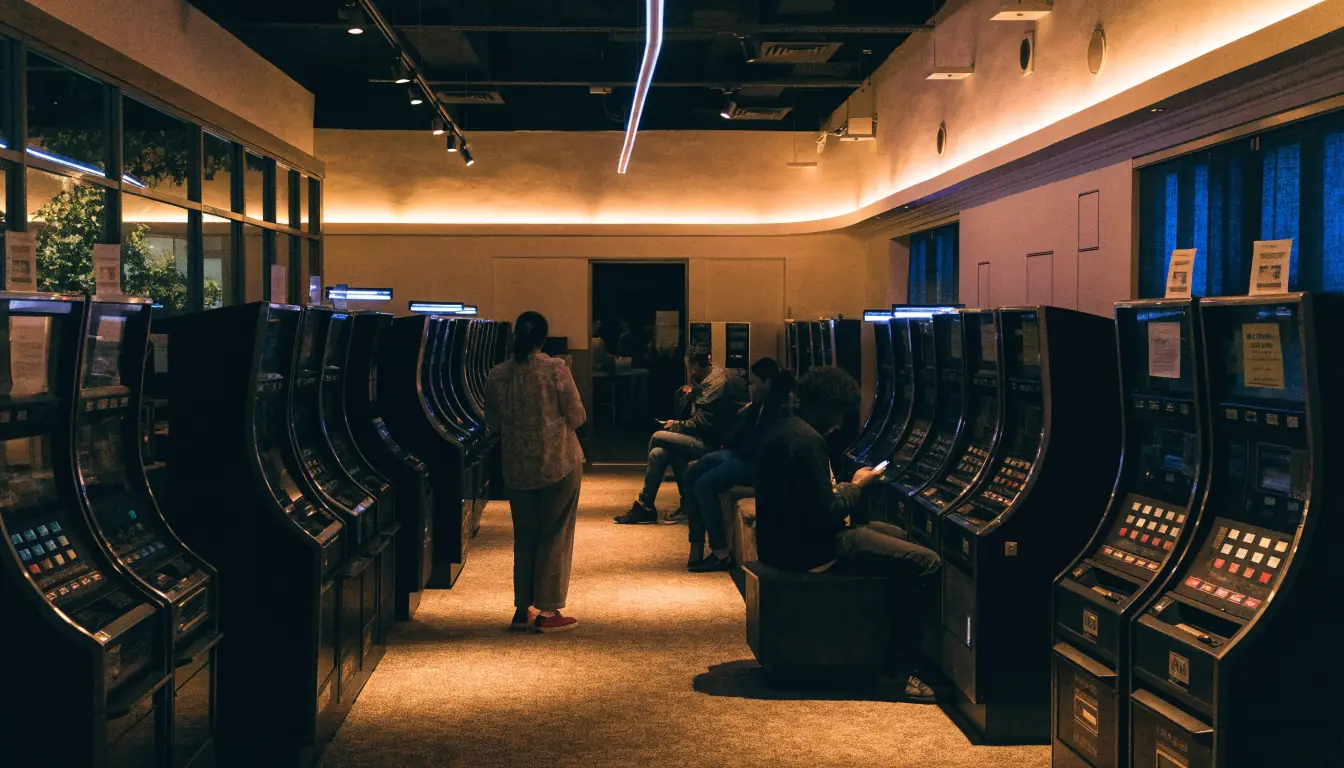
That leaves a narrow but useful conclusion: Crown Sydney can be identified as the subject of the enquiry, but the wording alone cannot establish a pokies offering or support a claim about the “best” room. Any description that goes further needs specific evidence tied to Crown Sydney and the detail being claimed. Without it, naming machines, ranking rooms or describing facilities would turn an unanswered point into an apparent fact.
Sydney Pokies Venues and Their Operating Responsibilities
A venue’s machine count can determine what staffing and record-keeping duties apply; it does not establish that the venue is the best place to play. For Sydney pokies venues, these obligations are more useful as a measure of operating responsibility than as a basis for ranking locations.
A report by regionriverina.com.au describes a requirement taking effect from 1 July: a venue operating more than 20 gaming machines must have a dedicated responsible gambling officer (RGO) on duty for as long as those machines are running. The threshold concerns the venue’s total number of machines, not the number operating in one room. The duty is tied to machine operation, so the relevant question is whether the required officer is present during those operating periods.
The same report describes a one-month grace period for venues to put the changes in place. That period covers both introducing the RGO role and removing signage covered by the changes. It is not an open-ended allowance for existing signs to remain. In particular, signs directing patrons to gaming lounges must be removed if they are within eyeshot of ATMs or EFTPOS terminals. Signs directing patrons to ATMs must also be removed when they are within eyesight of gaming machines. Placement matters: a sign’s general purpose does not cancel the restriction on where it can be seen.

Record-keeping is another part of the reported safeguards. Venues are required to maintain a gambling incident register documenting relevant occurrences, including behaviour suggesting that a patron may be at risk of gambling harm or already affected by it. The register makes an incident something to record, rather than a concern that can disappear when a shift ends. Its purpose is operational accountability, not a public scorecard for comparing venues.
These requirements do not identify a particular Sydney venue, establish its machine count, or show whether it is currently meeting its responsibilities. Nor do they demonstrate that one location offers a better playing experience than another. A venue comparison would need reliable, current details about the individual venue; the presence of a general rule alone cannot supply them.
For anyone assessing a venue, the useful distinction is between a rule and evidence of compliance. The reported threshold sets when a dedicated RGO must be on duty, while the register and signage provisions describe further responsibilities. None is a ranking criterion, and none turns a search for the best pokies venue in Sydney into a verified shortlist. A responsible operating framework is a baseline, not a promise about outcomes or a substitute for venue-specific information.
Twenty-Four-Hour Pokies: Availability Must Be Checked, Not Assumed
A listing that describes a venue as open around the clock is not, by itself, confirmation that its pokies are available at the time of arrival. The label may refer to the venue generally, may be out of date, or may not distinguish between opening hours and access to a particular area. Those details affect whether a late visit is viable.

For current status, the useful check is venue-specific and time-specific. An official venue page or direct confirmation can establish whether the premises are open now; a separate check should establish whether pokies are operating during that period. If the information comes from a directory or map listing, its update status matters. A page showing no recent confirmation is a lead, not a final answer.
Opening hours also need to be read as a schedule, rather than reduced to a single “24-hour” label. A venue may publish different hours for different days or areas, and temporary changes can make a standing listing unreliable. Confirm the relevant day and the intended arrival time. Where a venue has not clearly stated that pokies are available continuously, that should not be inferred from the venue’s general opening status.
The distinction is practical: a premises can be open without every service or area being available. A current-status check should therefore cover both the venue and the pokies, rather than treating one as proof of the other. If the answer is unclear, the opening time cannot be treated as established.
For anyone comparing Sydney pokies opening hours, record the venue’s own stated schedule and the date it was checked. Recheck close to the planned visit if the decision depends on continuous access. Search results can help identify places to investigate, but they do not establish that any Sydney venue operates around the clock. Availability should be confirmed directly, not assumed from a headline.
CBD Clubs and Pokies: Venue Details Need Verification
A club in Sydney’s central business district is not interchangeable with any other venue described as being in Sydney. The location label, the type of venue and the availability of pokies are separate details; one does not establish the others. A shortlist built from a venue name or a CBD tag alone would therefore be a poor basis for comparison.

Before treating a club as an option, confirm that its current venue information identifies the relevant address and pokies facilities. Machine counts should be checked against information for that particular venue, not inferred from a general description of the club or from details attached to another location. If a listing does not make those points clear, it cannot support a meaningful comparison.
The word “best” also needs a defined measure. A venue’s location may matter for a CBD visit, but it does not establish the games available, their settings or the quality of the venue’s services. Those are distinct questions. Without venue-specific details, ranking clubs would give a veneer of precision to information that does not establish a winner.
Self-exclusion is a separate consideration from venue selection. It is a responsible-gambling tool, but the existence of that option in general does not establish a particular club’s process or coverage. Venue-specific arrangements should be confirmed directly before relying on them. BetStop has a narrower scope: it applies to Australian-licensed operators and does not bind offshore sites. It should not be treated as a substitute for checking a club’s own arrangements.
A useful comparison record is therefore modest: the exact venue, its address, confirmation that pokies are available, any published machine information, and the venue’s stated self-exclusion procedure. If one of those details cannot be matched to that location, leave it unscored rather than filling the gap with an assumption. That produces a smaller comparison, but a defensible one.

Parkes and Sydney Searches: Resolve the Location Before Comparing
A reference to Parkes alongside Sydney does not, by itself, identify a particular venue or establish that the intended location is in Sydney. The place name needs to be resolved before any comparison is meaningful. Otherwise, details attached to one location can be mistaken for details about another.
The same distinction applies when comparing pokies in Sydney. A broad city label is not a venue description: it does not establish a machine selection, operating hours or other venue conditions. A useful comparison starts with an identifiable venue and information that applies to that venue, rather than a place name carried over from a search or listing.
“Best” also depends on what is being compared. A ranking cannot be inferred from the words Sydney and Parkes alone. It would need a defined basis, such as a particular venue feature, and evidence that the feature belongs to the named venue. Without that, a confident ordering would be presentation, not analysis.
For a Parkes-related result, the key check is whether Parkes is the intended destination and whether the venue named actually corresponds to it. For a Sydney comparison, the venue itself must be identified independently. These are separate checks: resolving a place name does not verify a venue, and identifying a venue does not establish that it meets a preferred criterion.
This avoids a basic category error: treating a location label as evidence about the pokies available there. Comparisons become useful only when the location and venue refer to the same thing, and the stated details can be tied to that venue. Until then, there is no sound basis for treating a Parkes reference as a Sydney option or for ranking either location.
Are online pokies legal for Australian players?
Yes, Australians can legally play on offshore sites that accept them, but no Australian-licensed online casino exists. The law prohibits operators from offering real-money online pokies to Australians without a domestic licence, and players have no legal recourse in Australia if an offshore casino refuses to pay.
What does “wagering requirement” actually mean?
It is the amount you must bet before bonus winnings can be withdrawn, calculated by multiplying the relevant bonus amount by the stated turnover requirement. For example, a $500 bonus at 40x requires $20,000 in bets; a 35x requirement on a $500 deposit plus a $500 bonus means $35,000 in bets.
Can casinos change the RTP of their games?
Yes. Some game providers let casinos choose between multiple RTP settings for the same pokie, so its return percentage can vary between casinos. Each spin is still an independent random event determined by a Random Number Generator.
What is the cost-benefit calculation of casino promotions?
Compare the bonus with the required wagering: a $500 bonus at 40x requires $20,000 in bets, while a 35x requirement on a $500 deposit plus a $500 bonus requires $35,000. Also check for cash-out caps on free-spin winnings, since they can limit what you can withdraw.
Created by the ”Crusino Casino” editorial team.